
January 16, 2015 Savannah, Georgia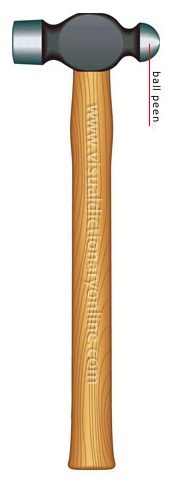
The past few days have been a bit strange for me. Those of you who know me personally know that there has been little conventional about my life, so for me to say that the days have been strange is really weird. To begin, and out of the blue, I’ve heard from several old friends with whom I had not been in contact for a decade or more. I’ve twice in as many days seen the words “ball peen hammer” written in messages to me, and while my father’s tool chest had a ball peen, I don’t know that I have ever seen the word written before – and in neither of the missives I received was it referring to traditional uses of the tool.
For example, there was this one:
“Gotta love my country cousin~. Either that or bash him in the head with a ball peen hammer~”
And then I was in the grocery store thinking about a Facebook friend’s comments about not using bell peppers in red sauces (!) and I looked up and saw béchamel in a jar. REALLY?! Are folks actually so busy or unenamored of cooking that they won’t make a white sauce – one of the foundations of classical cooking? Anne Willan, founder of the famed École de Cuisine La Varenne in Paris, has written, “It is the French who have written the grammar of sauces, defining a structure of ‘mother’ sauces that have been absorbed into the international language of cooking.” While admitting that “by no means all good sauces are French,” she explains in her encyclopedic La Varenne Pratique (Crown,1989) that nearly all sauces can be divided into families according to their basic ingredients. White sauces, of which there are two basic types – those that are milk-based, like béchamel (la besciamella in Italian), and those that are stock-based (called velouté), “offer the widest range of possibilities in the whole sauce repertoire.”
Now, to be honest, I’ve always known that I was different. We – meaning my family – were “from off.” Both of my parents were trained as scientists. My mother, who chose to run a household instead of getting a job in her field, studied biology as one of the first students to embrace B. F. Skinner’s behaviorism; my father was a brilliant chemist who worked on the Manhattan Project. So when we found ourselves in Orangeburg, South Carolina, in the early 50s, where nearly everyone else at that time was native, it wasn’t hard to realize that we were different from most. When we moved there, our two cars were an Austin Healy and an M.G. My father was a ham radio operator. We had a wine “cellar.” We subscribed to The New Yorker and The New York Times.
My mother was an adventurous cook who did not like to repeat herself. A white sauce was as basic to her kitchen as bacon grease. She preferred broccoli over greens. We were rarely served dried beans because my father, who had grown up poor and subsisted on them during the Depression, eschewed them. Mother thought nothing of making exotic breads, elaborate desserts, and complicated main dishes. We were different.
Since my father was an electronics wiz, we were often the first in town to have a television, a transistor radio, or a stereo – usually built by him. But, Mother told me, by the time we got a television, I had learned to entertain myself differently. Yes, I remember watching Howdy Doody and Disney, but tv never held my attention for long. I have never followed a series, except for one season of Six Feet Under that I watched with friends in the 90s in Charleston on the weekend after a day of boating. I couldn’t watch the second season; I thought the writers were moving the characters away from their established personae. I’ve never owned a television myself. (I don’t count the handful that my parents gave me over the years and which stayed in my home for perhaps a week before I put them out on the street.)
So I find it particularly bizarre when people tell me that they don’t have time to cook – even people who like good food – as they ask me if I have seen the latest episode of any number of television shows. The only one I can think of right now is Mad Men and I remember it only because my husband made me watch one episode. I’m pretty sure that that is the only television broadcast I have seen in 12 years.
I was thinking about that as I looked incredulously at that commercial jar of béchamel. It was next to the commercial mayonnaises, none of which are what the French or Italians would call mayonnaise (maionese in Italian). Don’t get me going on soy oil, which is not considered edible where soy is traditionally grown. It takes – maximum – 5 minutes to make homemade, unctuous, delicious mayo. It lasts a week in the fridge. It takes – max – a half hour to make white sauce.

Now, granted, I happen to like to cook. I find it relaxing and pleasurable. I like whisking the flour into the butter and the milk into the roux and standing over the stove, whisking constantly until it thickens. I have recently reunited with my LPs and as a house-warming present, I received a “new” stereo, complete with turntable and tape deck! I put on some obscure record I haven’t heard in years and make the sauce. I can’t imagine lasagne al forno (the auto-correct on this program keeps changing the lasagne – plural – to lasagna, singular. We don’t say fettuccina, but fettuccine.)
I can make fairly traditional lasagne bolognesi (with meat sauce) without a recipe, but I thought I would do a bit of browsing online to see what variations I might find from my standard of sauce, noodles, besciamella, and Parmesan. Sometimes I use ricotta. Sometimes I use some mozzarella. Sometimes there are mushrooms involved. But I usually use a white sauce. Most of the American recipes I encountered – including the one on the box of noodles I bought – called for none. I realize of course that many Italian-Americans came from southern Italy, where “lasagne de carnevale” (with meat) is reserved for special occasions; many recipes from Naples include eggs and breadcrumbs in lieu of a white sauce. But my dear friend Celia Cerasoli, whose heritage is Sicilian and Abruzzese, has made a name for herself in Charleston with her delicious baked lasagne dishes – both meat-laden and vegetarian – and she uses besciamella.
Celia, like me, also makes her own bread. Now that I’m spending most of my time alone, I am not baking bread as often as I was in China because, well, it’s just me here. But every time I go buy bread I curse myself for having done so since baking bread is so simple – especially now that there are excellent, no-knead recipes out there. I don’t think I’ve ever had two loaves come out the same. I keep experimenting. I swear every bag of flour is different and the amount of natural yeast in the air matters, as well as the humidity of the day and the barometric pressure. But even my worst efforts are usually better than anything I can buy here in Savannah. (The last loaf I bought, from a respectable bakery, was called an “Italian baguette.” It cost $4 and was all but flavorless, in spite of its nice crust and decent crumb.)
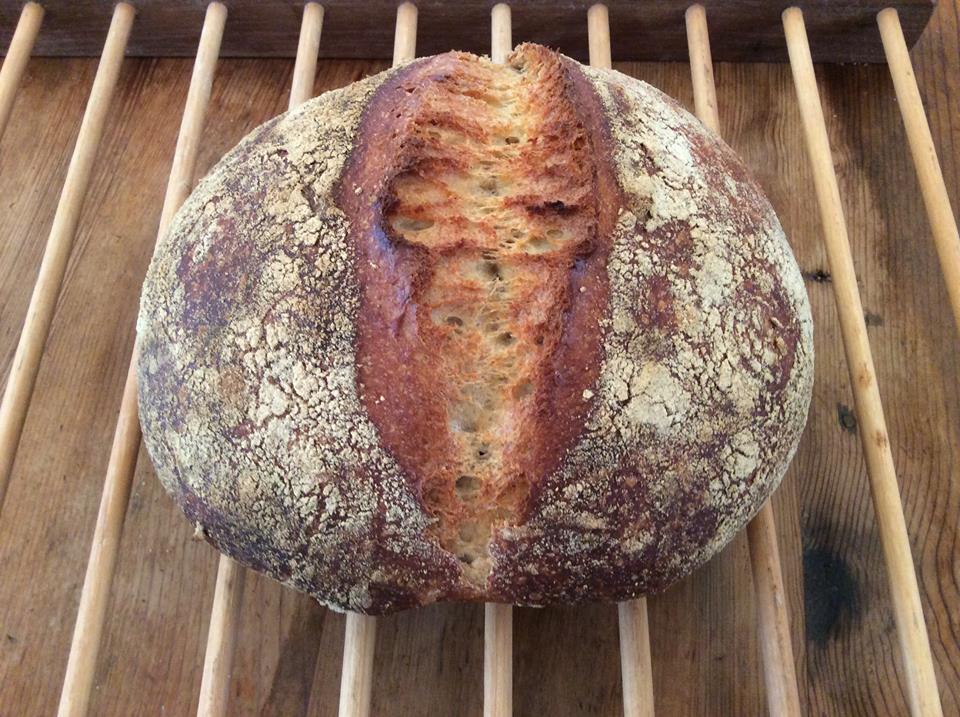
Earlier today on a Mediterranean foods group page on Facebook I read this “recipe” for a pomegranate soup. It cracked me up because I tend to think the way this blog was written. I’m not giving you any recipes for lasagne or bread today. Lord knows the internet is filled with them.
But I do want to share something else with you. Yes, we were different. I think I’ve established that. Most of my friends in school were girls. There was a guy my age who was the class artist. He could draw like crazy and he was always very nice to me, but we were never really friends. Our paths have never crossed since we graduated from high school 47 years ago, until we ran into each other on Facebook. Needless to say, I was somewhat shocked when he wrote this today as a comment on a series of photos of myself that I had posted. I was feeling a bit down yesterday. It’s been cloudy and rainy for a week, I’ve still not seen a doctor who can help me with some medical issues I’m having and I am really missing my husband, who is on the other side of the world.
Hank Richardson is President of the Portfolio Center in Atlanta. Hank, thanks for the kind words. I’m afraid this blog is a poor comeback. I knew that I had helped revive traditional lowcountry cooking, that I had helped put stone-ground grits back on the American table, and that I had revealed some culinary history previously unknown. But I didn’t realize that I had had any other impact. I’m humbled by your words:
“In 60 years John you have always been loving, sharing, learning, caring, empathetic, forgiving, laughing, hugging, helping, dancing, cooking, traveling, sharing old friendships and making new ones, wondering, healing… and John you still have that most charming smile!”