 February 12, 2013 Winter is not my favorite time of year. I don’t really mind the cold, but snow and ice are no fun when the streets and sidewalks aren’t scraped or salted. Throughout Europe, last winter was the worst in a century. We had a foot of solid ice on the roads in our neighborhood, with ruts made by cars not unlike those left by chariots in the limestone streets of ancient cities. Since the only place to walk was in the middle of the street (the sidewalks are filled with parked cars), I did so with much trepidation, having fallen on ice several years ago and sustained a hip injury that continues to give me problems. Not that driving is any easier. Luckily, we have a garage for our car, from which I would enter the street and then try to maintain some type of control as the car settled into the ruts, its chassis scraping the ice. It was as though the car were a cross between a toy electric train and a bump car — swerving around in its ruts. Once I would get out of our neighborhood, I would stay on the main thoroughfares, plowed of snow and busy with enough traffic to keep the accumulation in check. I would venture out to the suburbs, to visit METRO, an Austrian Costco-like big box store where I can often find fresh oysters from France, grass-fed beef from Argentina, and fresh rabbits and quail from Italy. Or HIT, the German supermarket, where I buy tortillas and a nice (local!) melting cheese made from water buffalo milk.

I’ve let my 30-year mantra of “fresh and local” take a back seat to my bourgeois tastes. And so much for the carbon footprint of my meals! I see in today’s news that in France people are protesting the relatively long distances that their local beef travels to get (back) to them. Along the way, horse meat occasionally gets labeled as beef — hence the latest horse meat scandal occupying the news. Unfortunately, modern economics demand that food travel to satisfy our consumerist palates. My father lived in a small town in Florida surrounded by melon fields, but had to drive at least a half-hour in hopes of finding a roadside stand with local melons. When I lived in Charleston, South Carolina, I knew shrimpers who could not afford not to sell their entire catch at a higher price to the New York and Chicago trucks waiting at the dock to buy their entire catch — some of which would go spend a night or two in those northern cities and return to Charleston to be sold as fresh and local. Several years ago I was visiting friends in New Mexico where restaurants known for their “authentic” (a word I would love to see abandoned in the food world) Southwestern fare offered soft-shell crabs as a matter of course; at the time, I knew restaurateurs back on the East Coast who found them cost-prohibitive to serve.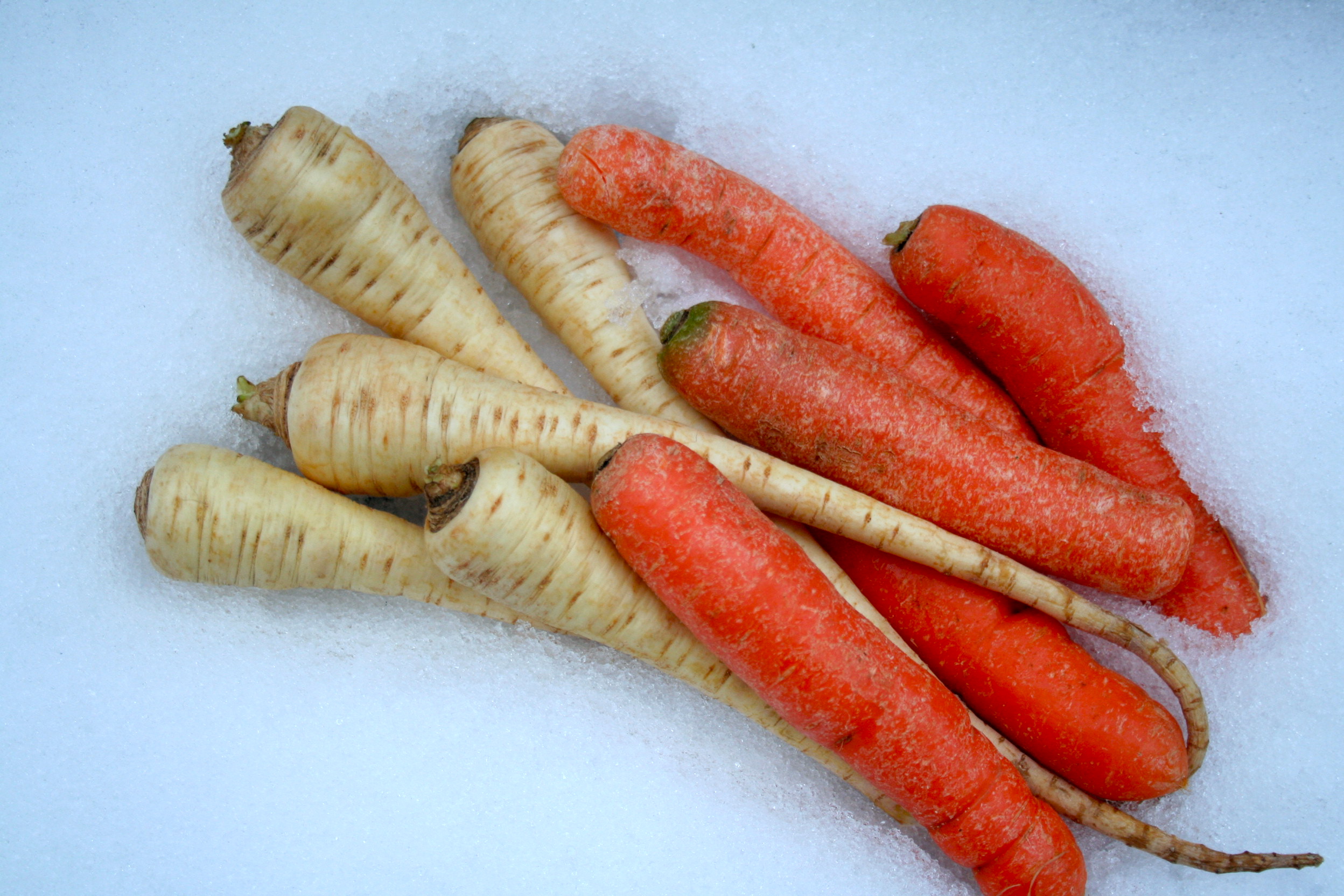
I’m always suspicious of statistics, though I do believe in the scientific method. (Always being sure to see who funded the research.) A few years ago — I no longer remember where, but I remember trusting the source — I read a report on the carbon footprint of foods that claimed that the peppers you buy from the small farmer who has driven 100 miles in his old pickup have a greater carbon footprint that those that have traveled in a jet from Chile. Of course the study mentioned neither taste nor biodiversity, but the article did make me pause to once again consider my food choices. Everything is so damned global and complicated these days! For most of us anyway.
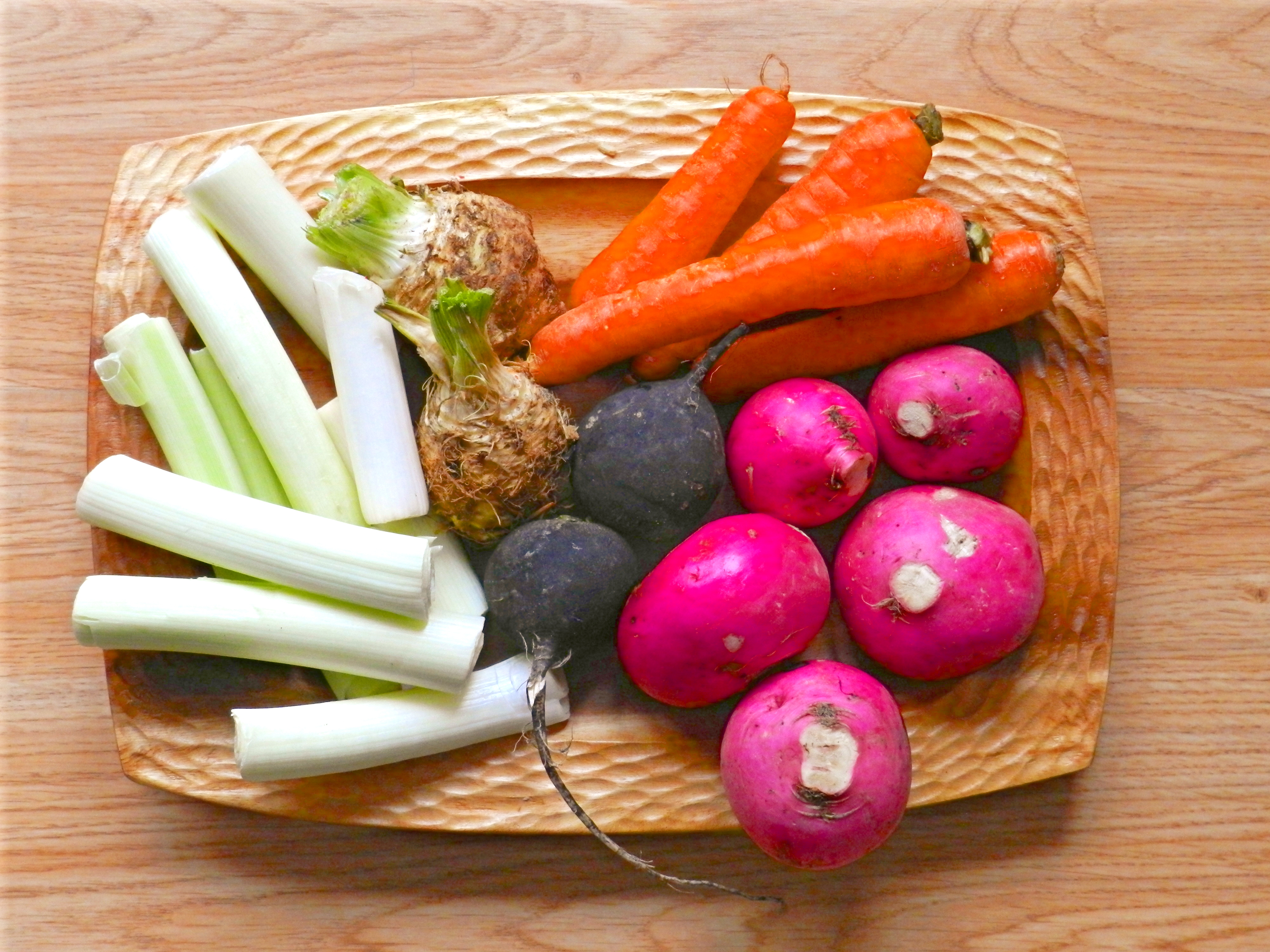
Most Bulgarians do not live in Sofia, the capital. Typically, they eat root vegetables and pickled and preserved fruits and vegetables from their elaborate pantries throughout the winter. I have lamented before in these pages the dearth of leafy green vegetables here and the relatively limited choice of ingredients in general, but I must commend the Balkans for their wonderful root vegetables — and not just potatoes, parsnips, and carrots, but all sorts of turnips (what I would give for the greens, which I’m told are fed to the hogs!), beets, radishes, and other underground roots and tubers such as parsley root, horseradish, celeriac, and daikon. At the top of the page, the leeks (4 feet tall and unlike any other leek I’ve ever had — absolutely mild and delicious) and scarlet turnips were gifts from a friend’s mother’s organic garden (I’ve written about the leeks before and I’ve grown the best tomatoes I’ve ever eaten from seeds from her garden.) I can’t for the life of me understand why they don’t eat turnip greens (or mustard, or kale, or collards), but I also can’t figure out how we Americans lost our taste for the wide variety of turnips and radishes that used to be popular there and are still available even in the poorest corners of this small Balkan country.
I am also curious as to why some vegetables move across borders and others don’t. Frankly, I can’t wait to get to China (pollution be damned!) if only for the greens. Curious about turnips in America, I went to my friend David Shields’s excellent American Heritage Vegetables site to see what he had discovered in his tireless efforts to identify and re-introduce tasty varieties of yore. The site deals mostly with the 19th century, but there are earlier records, so I wrote to David: ” I’m amazed that more varieties of [turnips and radishes] didn’t become popular in American gardens… and sooner. Fielding Burr [1863] lists dozens of varieties of turnips alone, and Alan Davidson wrote that both radishes and turnips were cultivated as table vegetables in China 1300 years ago. William Woys Weaver says that the black radish [pictured in the top photo] (sometimes called Spanish) was the popular radish of American farmers in the 19th Century. I wonder why it all but disappeared in the States? It’s very common here (and in China) where it’s used in everything from salads to soups, though printed recipes are notoriously hard to find here, thanks, I think, to the centuries of oppression. Throughout the Balkans, black radish is often grated, salted, and mixed with sour cream as a condiment (in much the same way you use horseradish — also common here). Daikon also seems to be as popular here as it is in Asia, where it appears in soups and stews more often than not (though ALL root vegetables go into the pickles both here and there). I just remembered a mallung of radish leaves I had in Sri Lanka a few years ago. I don’t know why I had never thought to eat radish greens before. Now when I crave turnip greens, I buy way more radishes than I need and steam the greens. I keep wondering if the foods that have survived here are partially because of the lingering effects of the Silk Road, though communism managed to wipe out so many culinary traditions. It’s amazing to leave Burgas on the Black Sea and travel to Istanbul, a little over 100 miles away, and for olive oil; turnip, mustard, and beet greens; green beans; and asparagus to be widely available. You pray to find them here.”

He wrote me back: ” Turnips have always been cultivated in number in the United States, perhaps because the English agronomist Arthur Young in the late 18th century touted them as livestock feed. But the 19th century brought an amazon number of new forms of the turnip to the table, and two of the varieties were cultivated exclusively for greens. With the exception of the French dish of duck with turnips they never had much of presence in haute dining, but were eaten widely, and still have a solid place at the table. The radish, as you suggest, has had its ups and downs in terms of popularity. The period from 1860 to 1930 marked the heyday of its consumption with the French breakfast radish the prime mover at the market. Eating radishes for breakfast with butter in the French style was a matter of course in hotel dining in any American big city. Beaufort SC before the First World War was the major growing center in the US. Three crops could be grown in a year there. It hasn’t been until the last five years the restaurants have revived them. You are correct in noting the relative disinterest in the Black Radish. Whole Foods stocks them, but the great fashion nowadays is the Chinese Watermelon radish. Four growers around Charleston now produce radishes. I would be curious to hear of your findings about Chinese greens.”
I may be finding out about those greens sooner than planned: our Mandarin instructor brought me a bagful of seeds this morning that includes (I think) bok choy, mustard, cilantro, and wax gourd. (The nomenclature of the Brassica genus, which includes bok choy and Chinese cabbage — each of which are known by both names, is maddeningly confusing in English. In Chinese, it’s worse. Brassica has four or five major species, and each species has several subspecies and subgroups as well. Brassica rapa Chinensis group alone includes seedling choy, Canton choy, Shanghai choy, Taiwan choy, several types of choy sum, tatsoi, and yau choy. Turnips are also Brassica rapa Rapifera Group; broccoli raab is Brassica rapa Ruvo Group.)
If there were one vegetable I would love to see returned to American tables, it’s the black radish. Available throughout northern and eastern Europe, it maintains its crisp, dense texture throughout the harsh winters. Black radishes can be perfect spheres the size of billiard balls, like those pictured above, or they can be carrot-like or shaped like a child’s top, as my friend, the “Queen of Vegetables,” Elizabeth Schneider, has noted. They are stronger than most table radishes but have a unique flavor that pairs well with fatty foods such as the sour cream dip mentioned above; they also marry well with goose fat and when roasted with a panful of other root vegetables (which is exactly what I did with the carrots, turnips, celeriac, and leeks of the photo), they lend a cool undertone that is beguiling and somewhat exotic to the American palate. Try them with foie gras or fish dishes, or in soups and gratins. Salt them and cook them first lightly to remove their harsh bite.
Ducks and Innards
Of course, winter is not just root vegetables and soups. It’s also butchering time, so I’m finding things that I don’t see throughout the year — veal sweetbreads, pork cheeks, old hens and roosters whose time had come — and tubs of homemade turshiya, sauerkraut, and pickles. Friends offer up jars of lyutenitsa (a pepper spread, sometimes including tomatoes, that varies as widely as any recipe I’ve ever seen — some are like chunky salsas and some are pureed to a ketchup consistency), ducks from their barnyards, and bottles of rakia, as I wrote about last month. I’ve also recently received pork kidneys, three ducks, and a slew of duck hearts, livers, and “white kidneys” (see photo at right).
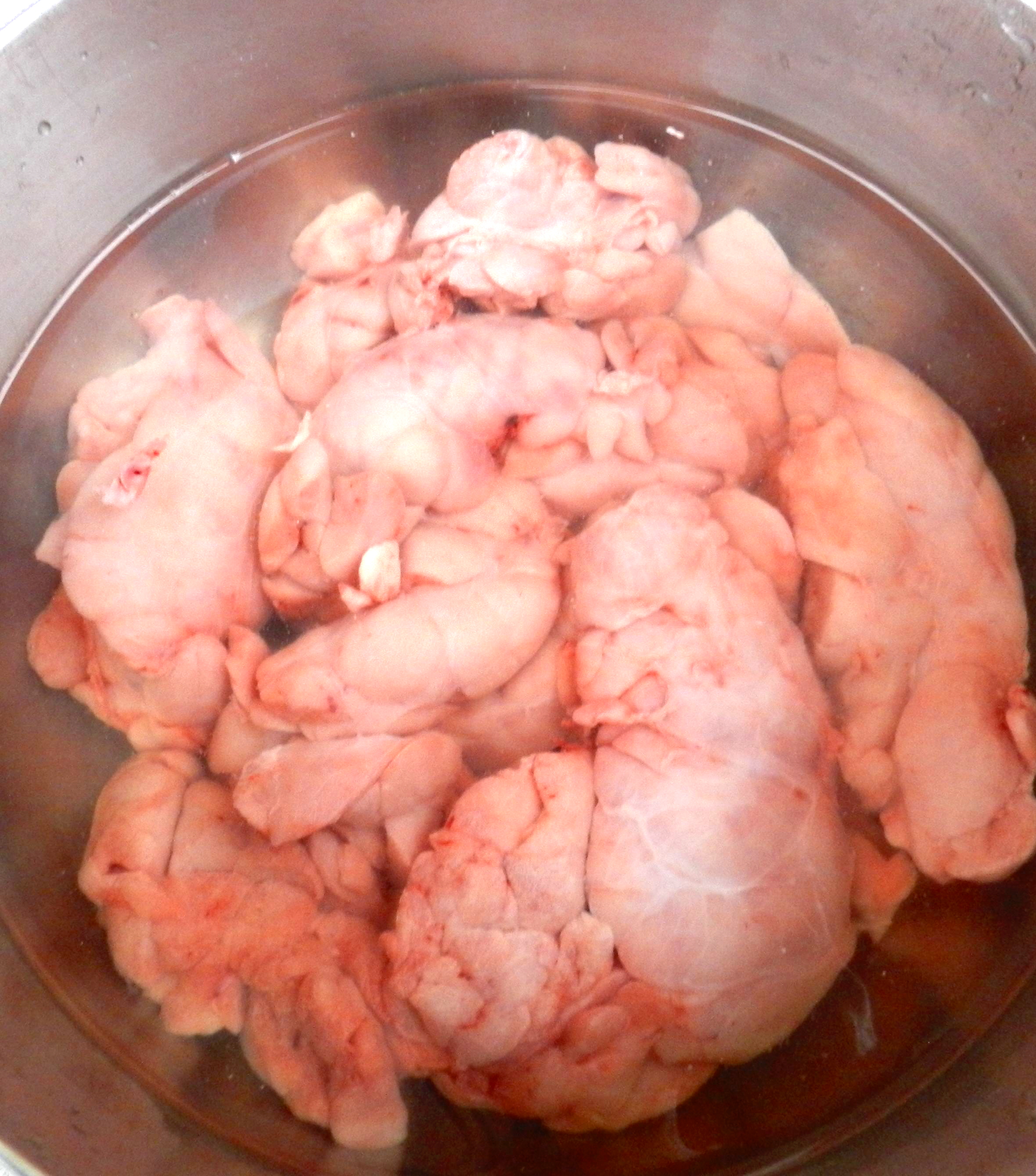 I bought several pounds of fresh sweetbreads (left) ; I couldn’t resist them. I’ve often said that picking thyme leaves from the stems is my least favorite kitchen chore, but now I have a new one: peeling the membranes from sweetbreads. Lord, is it tedious! I’ve done it before, but I never had this much to deal with. Oh, well, at least now I have a freezer full of them — ready to be sautéed off and added to all sorts of dishes. One evening, after they had been peeled, poached, pressed, and chilled, I dusted them in flour, egg, and bread crumbs then sautéed them in a butter/olive oil mix. I deglazed the pan with lemon juice then added a knob of butter, rinsed capers, and parsley, and tossed it all with pasta (photo, below right).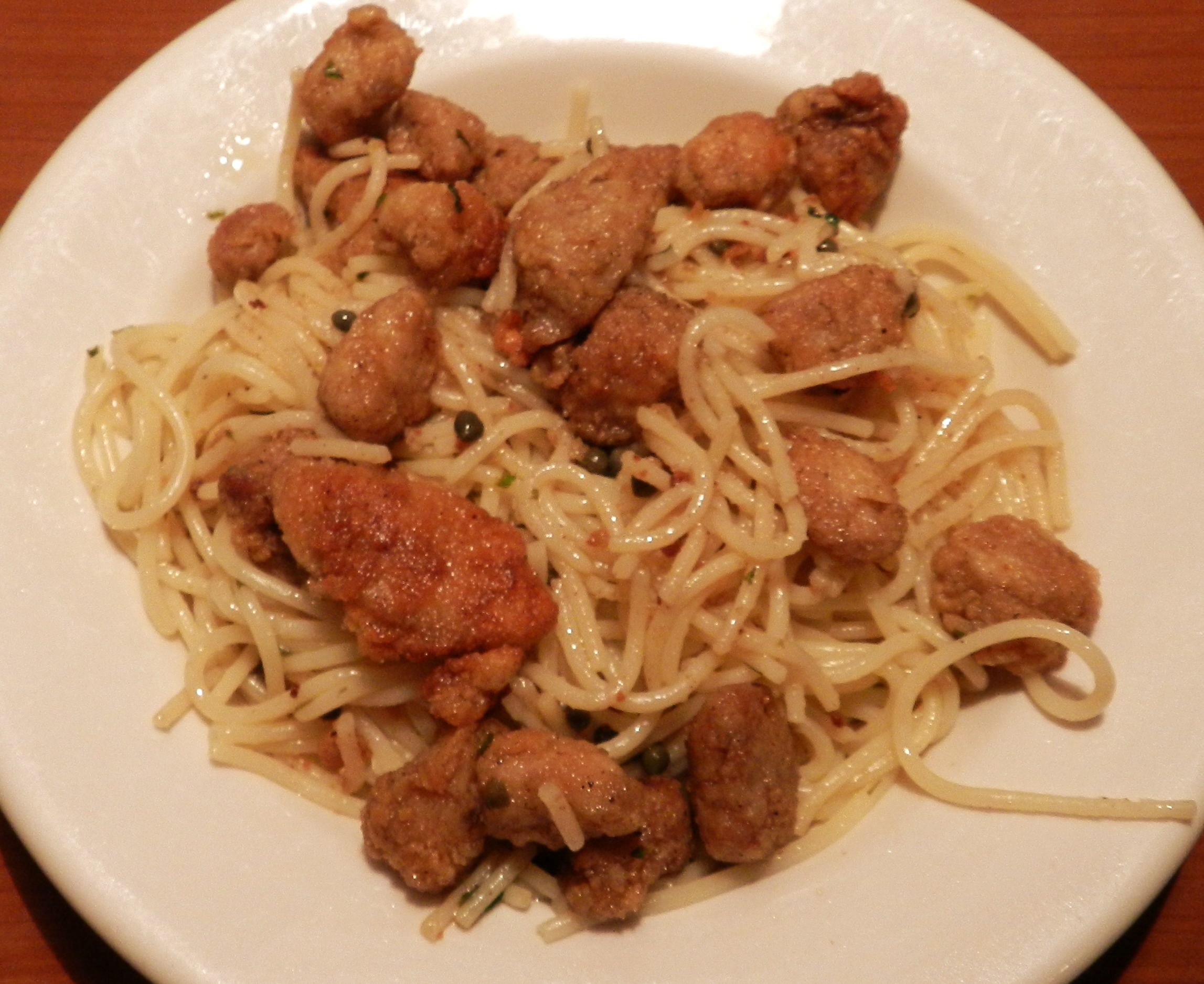
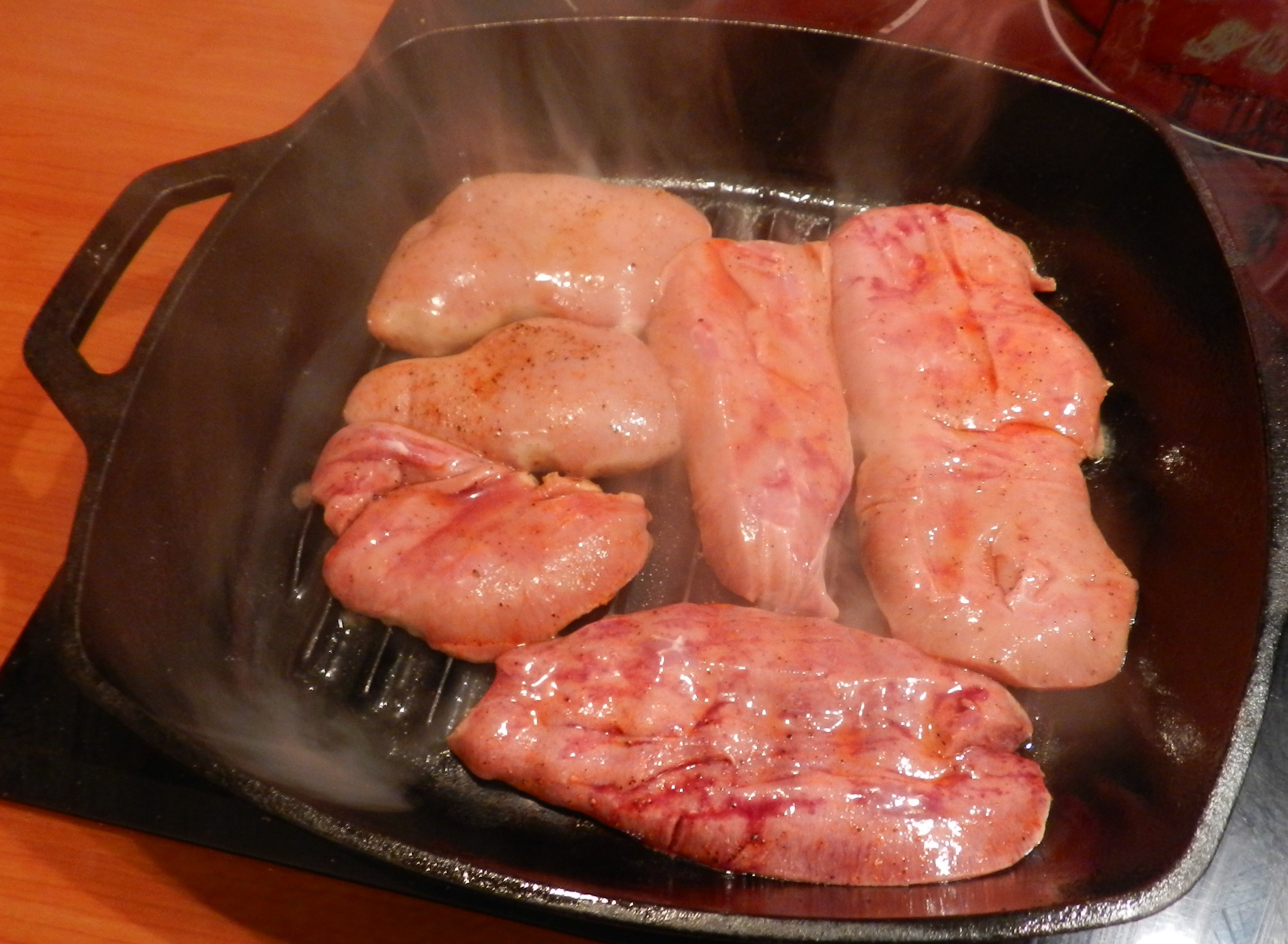
I’m really not a fan of kidneys (though I eat everything), but I knew if I could be sure to rid them of any hint of their function, I’d probably like them, so, remembering how I used to neutralize the uric acid of shark meat by soaking it in buttermilk, I used yogurt. I let them soak for a couple of days, then sliced them as evenly as possible and cooked them quickly in a grill pan, just until little red beads began to appear on the surface. I turned off the heat and flipped them over. They cooked very quickly and were indeed tasty (see photo, below left).
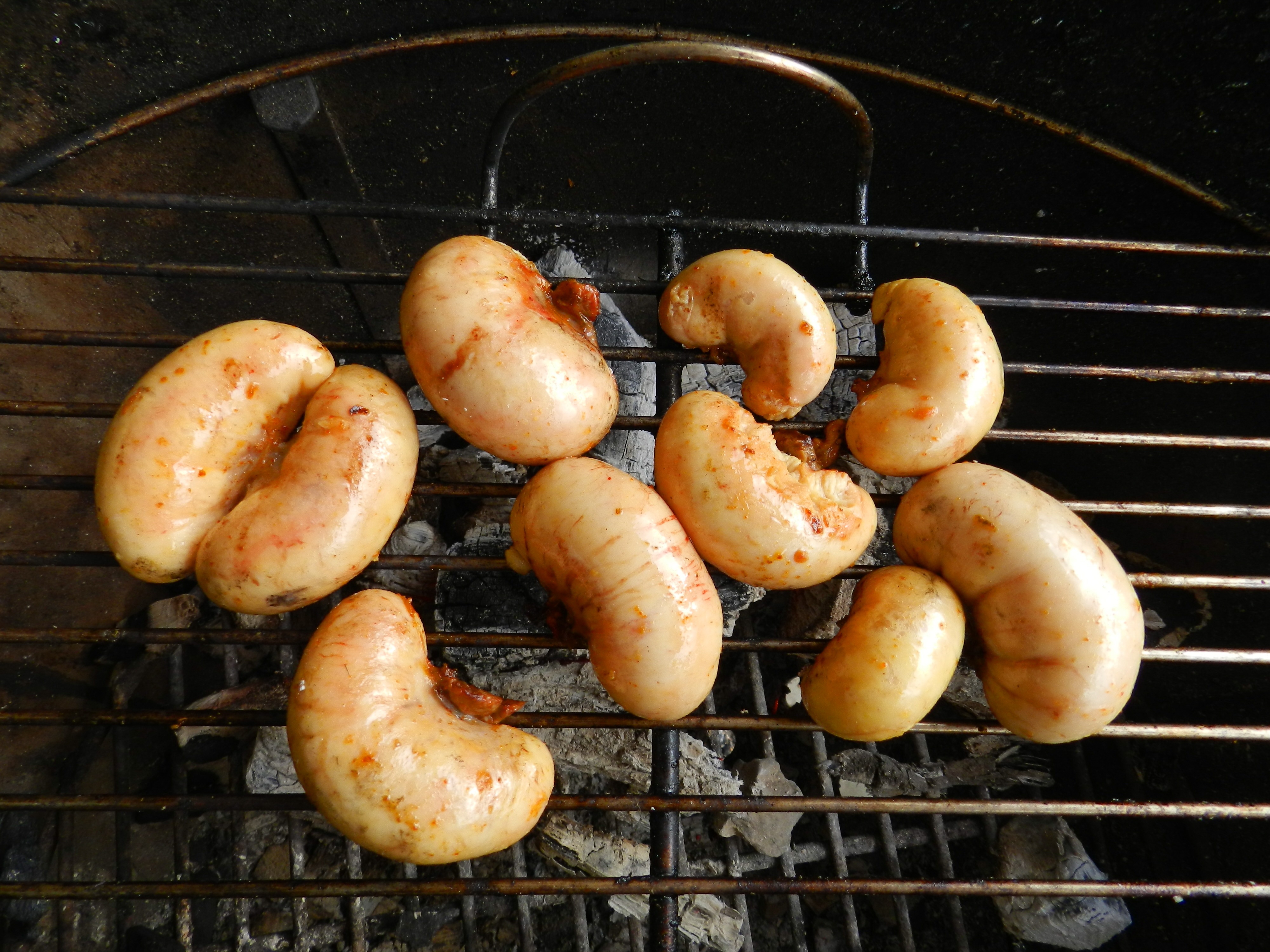
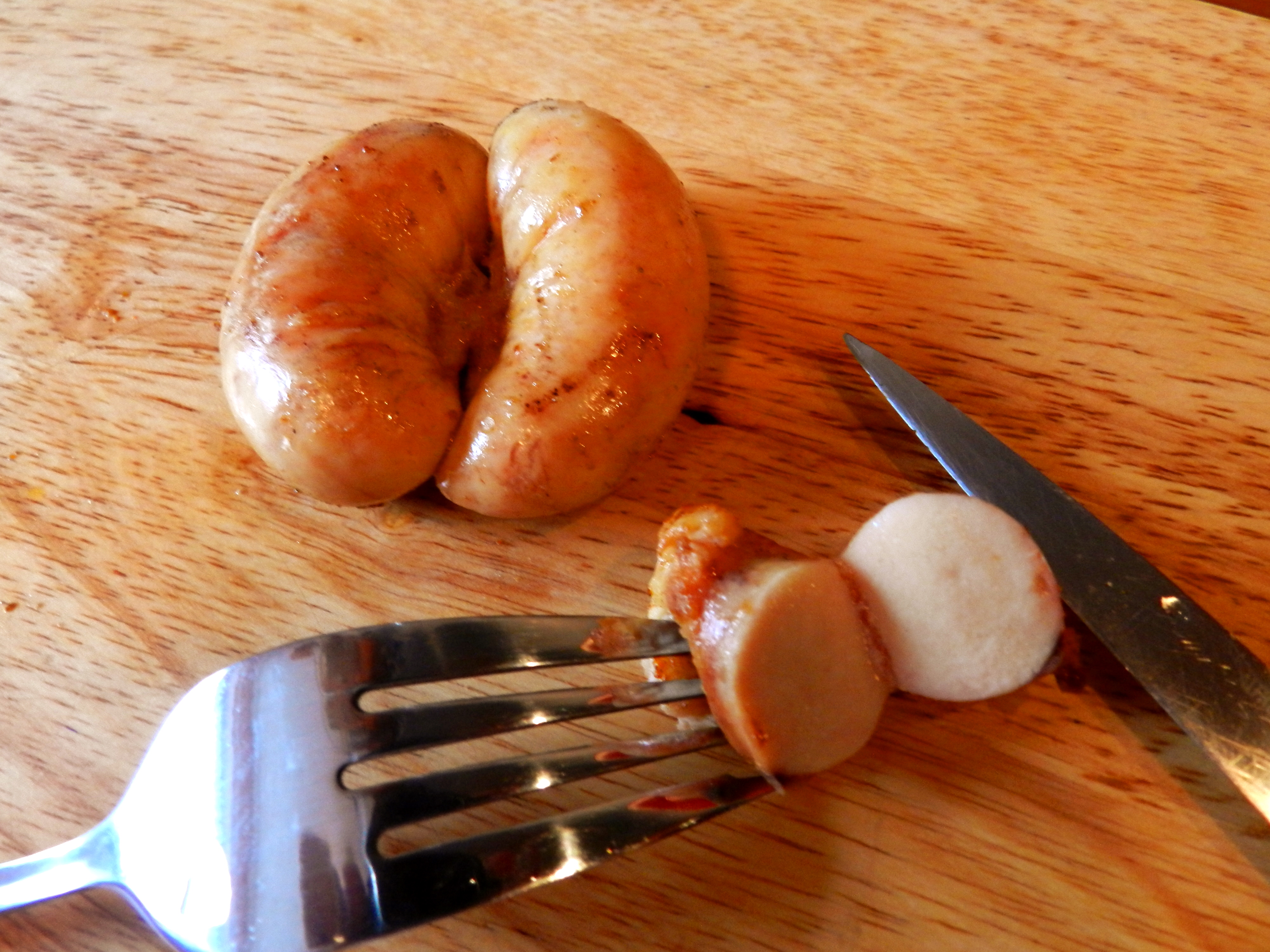
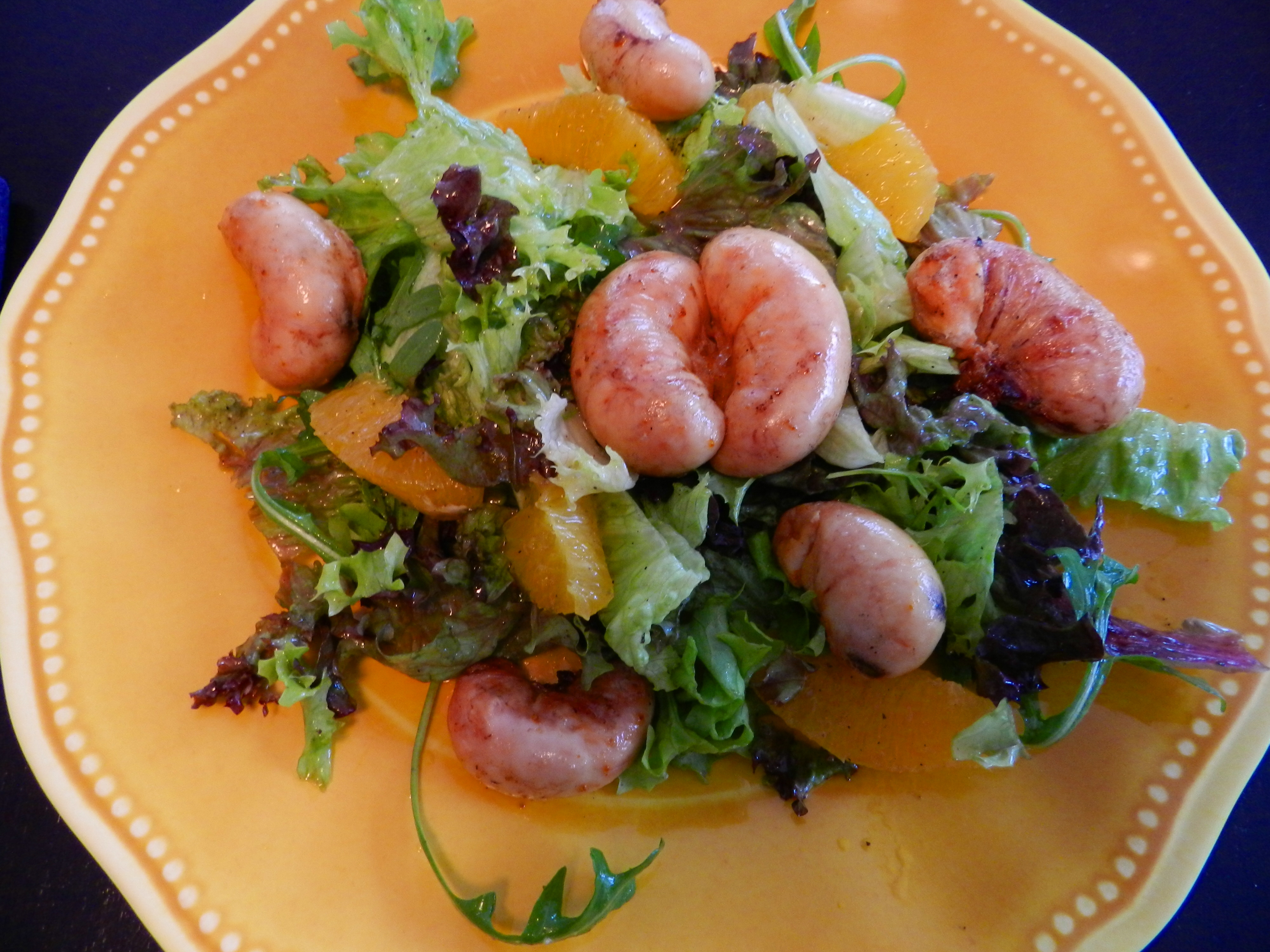
I made pâté with the duck livers and hearts, made gumbo with two of the ducks, and cooked the small one pictured above, stuffed with tangerines, over indirect heat in my trusty Weber kettle grill, which I’m so glad I brought with me (even if a windy balcony is not the best place to use it!). The great taste treat, though, were the “white kidneys,” which is what testes are called in several languages in Europe. (In English, the euphemism is “fries.”) I could tell they were delicate like sweetbreads, but they were intact (and, indeed, they look just like white kidneys), so I didn’t think that pressing would be necessary. I simply tossed them in a bowl with olive oil, salt, and pepper (the same way I treat most foods I’m grilling) and put them over the direct heat on the grill while the duck was cooking. They are so delicate, so creamy, and so delicious. If you can find them, I highly recommend you try them. See photos, below.