
February 1, 2013 In spite of my mother’s amazingly adventurous cooking in a small southern town in the 50s and 60s, there were certain things she never served us. Some of them, like lentils, I suspect she simply couldn’t find. Others, like okra, I think she herself did not like, in spite of the fact that, when I asked her years later, she told me that she didn’t serve it because WE didn’t like it. Ha! That never stopped her before. In fact, when there were items she couldn’t find, she would get together with her bridge and garden clubs and convince them to split a case of some hard-to-find vegetable like broccoli (! yes, hard-to-find!) or a side of veal, and have the local A&P order it. A much-repeated story about my mother, who demanded that everyone at her table at least sample each and every food being served — and clean one’s plate — even resulted in her being given a nickname that stuck throughout her life. I think Mary Jervey and I were in the Second Grade when she came over for dinner. Mother served broccoli. Mary said she didn’t care for any, that she didn’t like it. Mother, being a scientist, pursued the logical course: “Have you ever tried it?” Mary: “No, but I know I won’t like it.” Mother: “Well, how can you possibly know that you don’t like it if you’ve never tried it? At our house we all eat a little bit of everything.” The broccoli sat on the plate until it became clear that until Mary ate it, none of us would be having dessert (Mother made a from-scratch dessert for every supper and Sunday dinner). So Mary gave in, ate a bite of broccoli, and promptly threw up all over the table. Henceforth, Mother became “Becky Broccoli.” That’s how I remember the story, anyway. I’ll have to ask Mary on Facebook if I remember correctly. That was nearly 60 years ago!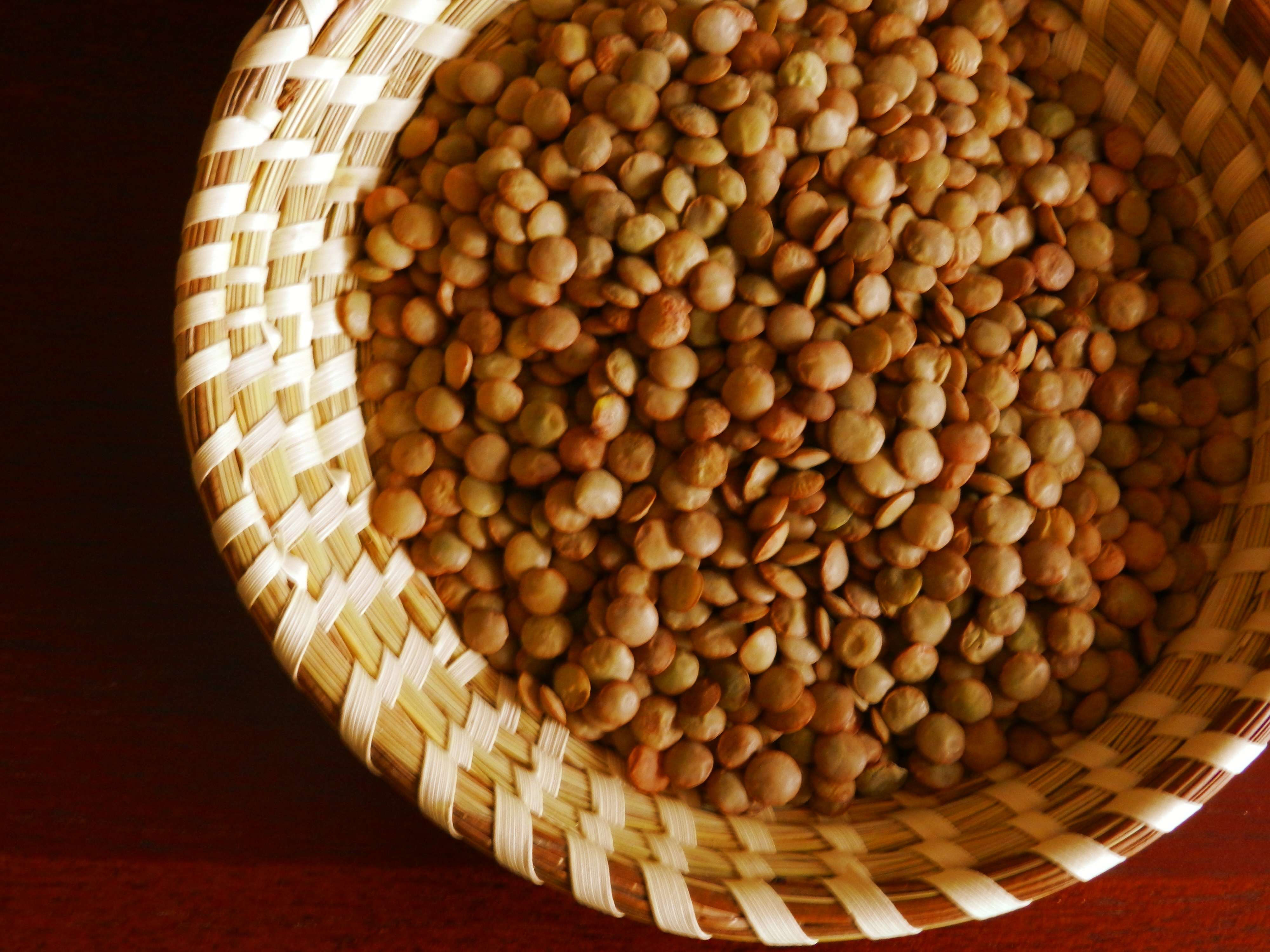
I honestly don’t remember the first time I had lentils — probably in one of those god-awful natural foods restaurants in the college town of Athens, Georgia, where I was studying at the university. If you were around then, you know the type of place: hippies, patchouli oil, cheap Indian bedspreads used as curtains and wall hangings, and earthen food that tasted of whole wheat and, well, earth. There was no Deborah Madison breaking new vegetarian ground (Chez Panisse, where she first cooked, didn’t even open until after I graduated); her first book wouldn’t be published until 1987. Mollie Katzen’s Moosewood Cookbook (from the restaurant of the same name, which opened in 1973) didn’t appear until 1977. And, besides, Athens was a long way from the San Francisco Bay Area and Ithaca, New York, where those restaurants were located. There was no Italian, French, or Indian restaurant in Athens where I could have had lentils. The exciting, in-depth books on the cooking of Morocco (Paula Wolfert), Mexico (Diana Kennedy), Italy (Marcella Hazan), and India (Julie Sahni), where lentils are daily fare, had not yet appeared. And I’m sure, if, indeed, I ate lentils at one of those mostly vegetarian restaurants, I would have missed the pork that is so often paired with the legume. And while certainly I would have had lentils at some point in my many travels throughout the Caribbean, I must have simply perceived them as “beans.” I didn’t write home about them, as was my wont when I had great food.
But eventually I moved to Europe, where I have continued to travel extensively and learned to love lentils. I still don’t know that much about them, as I realized this morning when I pulled out a package from my pantry and noticed the Cyrillic script that proclaimed them not only “екстра качество” — extra quality — but also “канадската леща”– Canadian lentils. Canadian? Who knew? Having spent a glorious weekend in the charming village of Leshten in the Rhodope Mountains of Bulgaria, I had heard that the town, settled in the 18th and 19th centuries, was so named because of the special lentils that grew there. (“Leshta” means lentil but it also means “lens.” The same is true in Latin: “Lens” originally meant lentils; a double-convex lens is lentil-shaped.) So, to my dismay, my package of lentils were not only not local, but they were from Canada — the world’s largest producer of lentils, I’ve since discovered. In Canada, the most commonly grown lentils are the large green lentil (Laird-type) and the red ones. Smaller green lentils are also grown, as well as limited quantities of Spanish brown, French green, and beluga lentils.
I’ve yet to meet a legume I didn’t like — from peanuts to fancy French Le Puy lentils. I love hearty pinto bean soups; traditional southern dishes of cowpeas such as my namesake, hoppin’ john; and the various dals of India, Pakistan, and Nepal. Still, they are conspicuous in their absence from many authoritative sources, and the authorities often disagree on their proper preparation. One of my favorite lentil qualities is their relative quick cooking time (especially compared to other dried beans), yet many cookbook writers advise cooking them for hours! Of course, like all dried legumes, cooking times vary greatly depending on quality, age, and how they have been stored. Even Richard Olney, one of the great writers on French cooking, advises cooking them for 1 to 1-1/2 hours. He eschews pork as a seasoning, but suggests serving lentils alongside it: “Lentils are a wonderful accompaniment to any of the various salted or smoked pork products, cooked apart in an herb and aromatic vegetable-flavored court bouillon. More often these meats are cooked together with the lentils, which, imbibing the fats and jealous flavors of the meats, lose their own pure autonomy, their digestibility being seriously compromised at the same time. ” (from Simple French Food, 1974)
The excellent Time-Life Good Cook series, for which Olney was the chief consultant, includes not one recipe in its volume on Soups. They are mentioned only in a chart that shows which puréeing equipment to use (a food mill or a strainer only), what liquids to cook them in (water and vegetable broth only), what thickeners to use (none), and what enrichments might be added (butter only). I think I detect Olney’s Gallic bias here, though I’m pretty sure the first lentil dish I remember eating in Paris was Saucisses aux Lentilles, in which sausages are pricked and added to the lentil pot for the final half hour or so. Here in the Balkans, no field peas except black-eyes in the southernmost reaches can be found, but there is a wide variety of other dried beans and lentils. 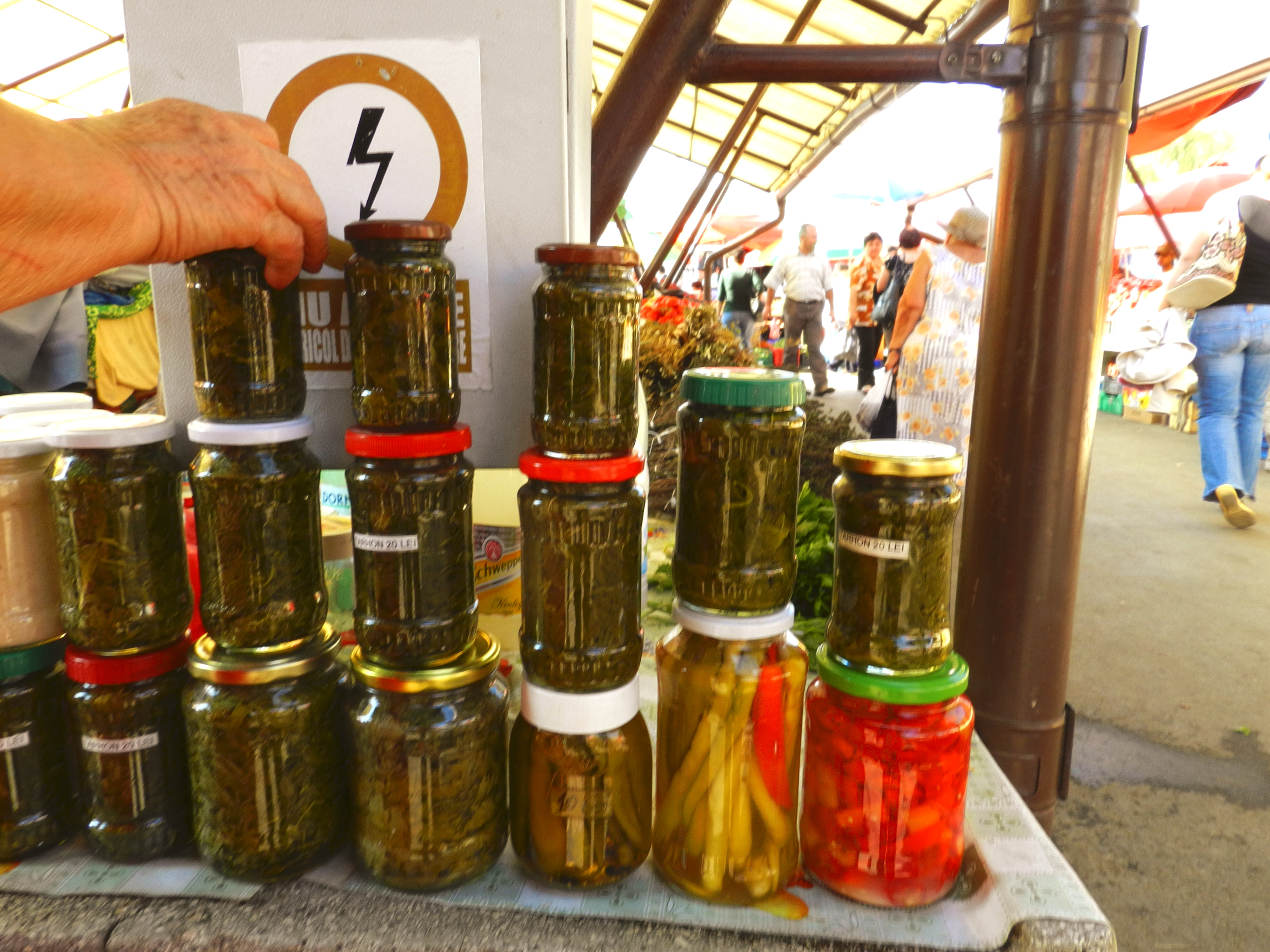 At this time of year, you are more likely than not to find a lentil soup as a daily offering in most restaurants. Plakia is a Bulgarian dish of lentils begun on top of the stove and finished in the oven with stewed vegetables typically including tomatoes, parsnips, and celery root. Lentil croquettes are also common. In neighboring Romania, a traditional Transylvanian dish, Lencsefözelék Tárkonyecettel (Lentils with Tarragon Vinegar — note the “lencse”) is perhaps a holdover from Habsburg days: lentils are soaked overnight, cooked with bay and onion, drained, and then tossed in a roux made of goose fat, grated onion, sugar, pepper, and flour. They are seasoned with the vinegar. (See photo at right of pickled tarragon for sale in the market in Sibiu, in the heart of Transylvania.) In Paul Kovi’s Transylvanian Cuisine (1985), he notes in his version of the recipe: “The taste of this dish is enhanced when smoked goose meat or pork chops are cooked with the lentils.” So much for Olney’s dicta. Kovi also gives a recipe for Lentil Soup with Partridge from Mezöség in which a soup is made with veal bones and aromatic vegetables. The soup is strained and partridges are cooked in the liquid, the soup is strained again, the birds are skinned and boned and the meat is cut up and set aside while the lentils are cooked in the strained soup. The soup is thickened with cooked rice, egg yolks, and cream; mushrooms sautéed in lard are added with the partridge meat.
While many traditional recipes do call for meat or bones to flavor the lentil pot (a ham bone here in Bulgaria, bacon in some regions of France and Italy, mutton in Malaysia), more often than not, though, it seems that lentils are cooked without meat but to go alongside it, as Olney suggests. In Hungary, buttered lentils (cooked with onion, carrots, and a pinch of ground cloves) are served with game, game birds, and sausages. In Austria, lentil soup is flavored with vegetables and caraway. In India, besides the dals, lentils are paired with rice in several dishes. In Germany, they are cooked with dried apricots and walnuts. And in Brazil there is a savory lentil pudding.
The names of pulses have always been confusing, so I was not surprised to find that what the Greeks call “fava” are actually yellow lentils, a puree of which is often served as a dip with crusty bread, chopped onion, and olive oil. And dals– or daals, or dhals — go by so many different regional names that it’s hard to know what you’re getting in Indian restaurants. There’s a Nepalese restaurant here in Sofia that serves lentils in various guises; I’m fond of chapatis stuffed with lentils and spinach. But I think my favorite lentil dish of all time was a dish of spicy red lentils cooked with coconut milk in Sri Lanka. It was called paripoo. However, since I don’t have access here to the Maldive fish (dried tuna), pandanus leaf, and curry leaves called for in the recipe, I think this evening I’ll just wilt some spinach and stir it into the cooked lentils. I can’t go to much more trouble since it’s now 2pm and this is the first thought I’ve given to dinner after having begun reading about lentils since this morning at 9!