December 28, 2012 I am an expert on none of the topics of my title … neither kidneys nor Middle Eastern breads nor Bulgarian traditions. But I do claim New Year’s Day as my favorite holiday if for no other reason than the serving of my namesake, hoppin’ john. I’ve written extensively about the traditional southern foods of the New Year, and am continually interviewed around the holidays. Yesterday there appeared this blog post about hoppin’ john. I was interviewed so many times in July, August, September, October, and November, that it is hard for me to keep all the interviews straight, but I do recall saying “a historian of belief systems, superstitions and traditions I’m not.” 
New Year’s Day This year, we’re having 26 friends over for New Year’s Day. I just paid $15 for 6 pounds of North Carolina sweet potatoes! (I’m not complaining — colleagues posted in Azerbaijan and Kazakhstan tell me they’ve never found them there.) We’ll have hoppin’ john (my sister sent me cowpeas; the ones my friend tried to grow for me were drowned in the floods of spring and early summer), greens (canned, from South Carolina), cornbread, and roast pork (it’s brining now), but I’ll also concentrate on some of the Bulgarian traditions.
On the left are two survachki that our friend Mihail gave us. You see them for sale at this time of year. The better ones like these, which are 2 to 3 feet long, are made from the branches of the Cornelian cherry (Cornus mas), an indigenous shrub that can become a small tree that bears small red berries (called drenki in Bulgarian) that ripen in mid to late summer. The edible fruit is very astringent and is used mostly for jam (its tartness and flavor is not unlike cranberries), though I was given only a spoonful once when I had diarrhea, which it immediately cured. In other Eastern European and Middle Eastern countries, the berries are distilled into alcoholic beverages or the dried fruits are eaten as snacks. In Turkey, a sherbert (a cold drink, not the ice-cream-like frozen dessert) is made. The plant is a popular ornamental, grown for its yellow flowers of late winter, which open prior to forsythia. 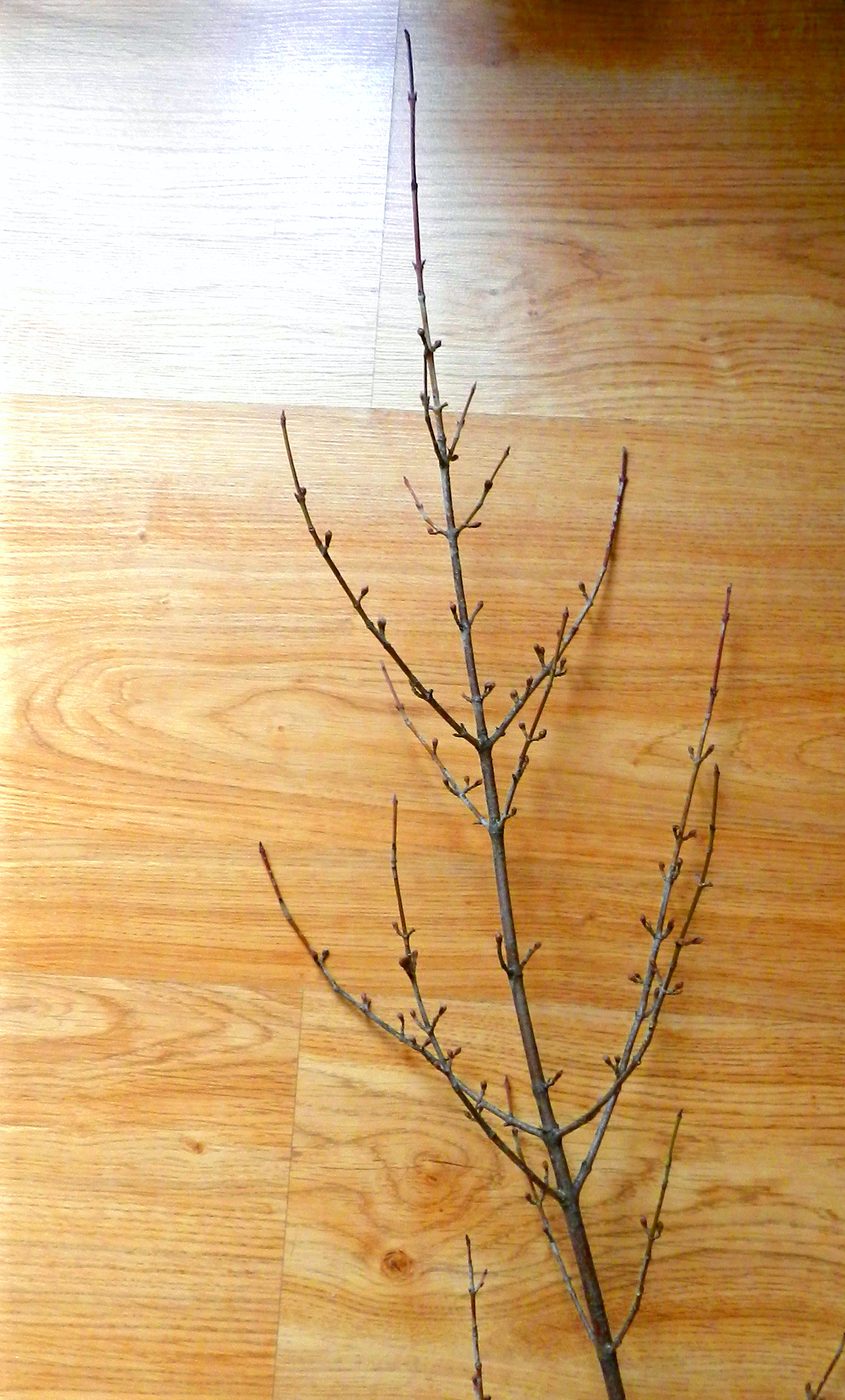 Twigs (see photo at right) are also offered at roadside stands selling holiday greenery and Christmas trees, for even in the dead of winter the flowers will open when brought into the warmth of a home. The twigs have both practical and symbolic advantages, as Mercia MacDermott has written in her exhaustive Bulgarian Folk Customs (copyright 1998, Jessica Kingsley, Publishers): “Its branches and twigs grow in pairs on either side of the main stem, and may be tied into a series of circles. Moreover, when a branch is placed in water…its buds will soon open…, proclaiming new life. … The wands are decorated with strings of popcorn, beans, dried fruit, garlic cloves, chili peppers, small rings of bread, unspun wool, red threads, pumpkin seeds, and many other things. The decoration usually reflects the local economy…. For a period from the 1940s onwards, urban objects…were used to decorate the wands sold by gypsies in the markets, but the 1980s saw a revival of the traditional style.”
The wands are used by children to tap on the backs of relatives and neighbors while repeating a chant that is little changed throughout Bulgaria. The chant, which begins “Surva, Surva year, a merry year!” calls for full ears of corn in the fields, red grapes on the vines, yellow quinces in the garden, a house full of silk, and a year full of money and health. Those whom the children tap reward them with sweets and small coins. MacDermott goes on to explain that the “word surva, from which so many terms connected with New Year customs are derived, does not occur in other contexts, but is cognate with surov, which means ‘severe,’ ‘harsh,’ and also ‘raw’ (of fruit and vegetables). When used of wood, surov means ‘green,’ as opposed to dry and seasoned so that there is a connection with life and sap.” In addition to “survachka,” the wand goes by several regional names, including surovaknitsa, surva, and vasilcharka. I’m thrilled that Mihail found us some traditional ones. Mikel and I will be tapping our friends on Tuesday!
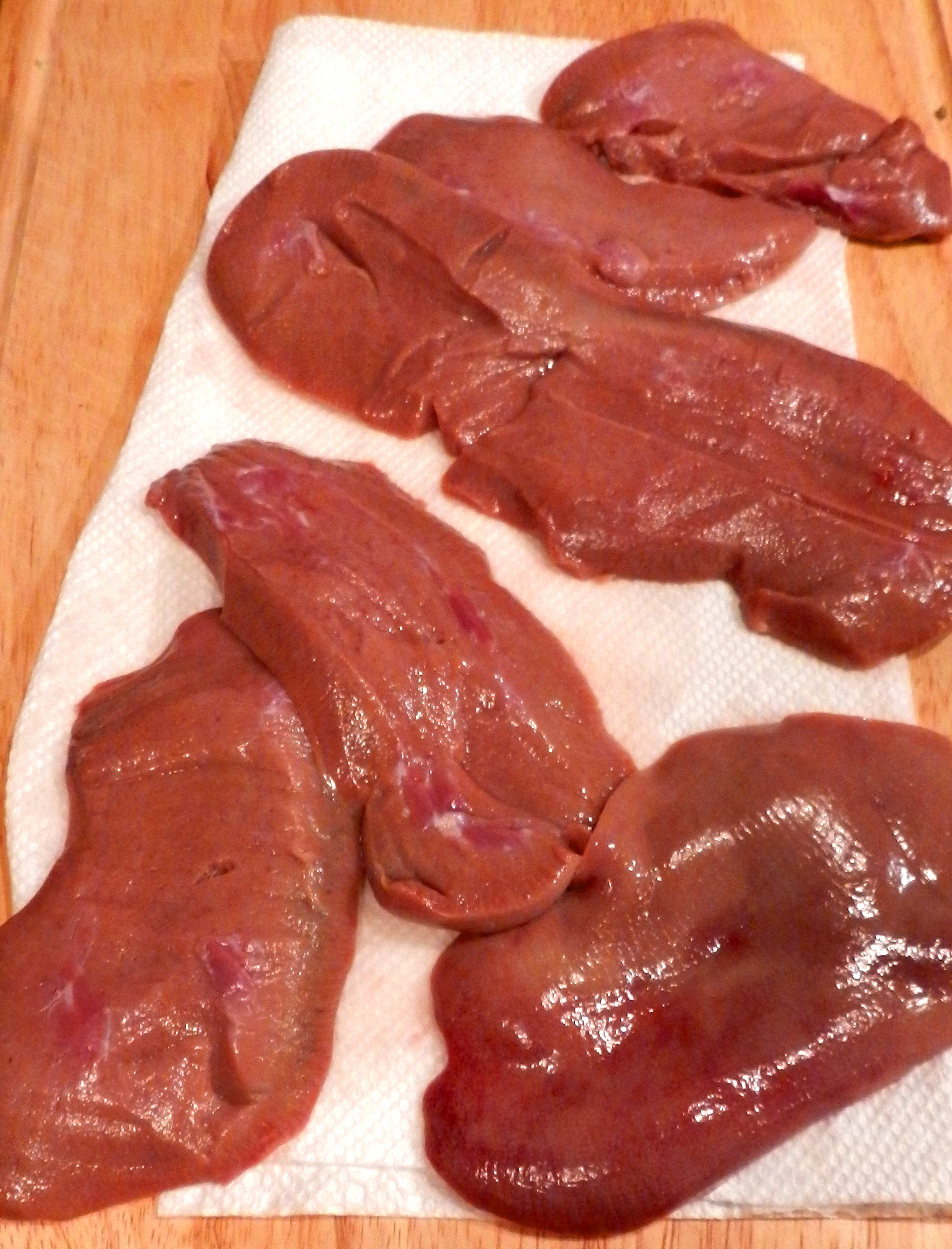
Kidneys My winemaker and farmer friend Philip Harmandjiev is often bringing me culinary treats, some of which I think he brings me simply because there’s no one else he can take them to! Last week he arrived with kidneys from some of his prize heritage hogs (some of which he has bred with wild hogs). At right you can see the raw kidneys as they looked when they arrived at my door. The darker ones in the rear are from older hogs. I’ll be honest: I’ve never been a fan of kidneys. My positive experiences with them in the past have been few and far between. I’m fond of saying that I eat everything, but I often draw the line at packaged, processed foods, and I’ve often said that I would never buy kidneys to cook myself or order them in a restaurant. I have ordered them before in French bistros and have been disappointed that they still had the distinct smell and taste of ammonia that defines their job in the body — and the lack of care on the part of the chef to remove that decidedly latrine-like characteristic. And once, while staying in one of America’s most famous resort hotels, kidneys were on the menu one day and the entire premises smelled like urine!
My two positive kidney experiences were: (1) while traveling down the eastern seaboard in the late 80s with Nancy Harmon Jenkins, we stopped in Culpeper, Virginia, to interview and enjoy the company of Jamie and Rachel Nicholl, whose Summerfield Farm was at the forefront of the natural/sustainable/heritage farm movement. When Jamie asked me if there were any foods I didn’t like, I said, “Well, I’m not particularly fond of kidneys, but I’ve only had them once when I cared for them.” [That “once” to follow.] Jamie proceeded to take the kidneys from one of his freshly slaughtered, milk-fed lambs, skewer them on oak twigs, and roast them in his fireplace. They were delicious. (2) When I first moved to Europe, I had arranged to work on a barge in France. The offices were in London and I arrived during the ugliest May I can remember, with nothing but rain and gray skies. One day, miserably under-dressed, soaking wet, and horribly depressed (the person who had had the job the year before decided to come take it after all), I ducked in a pub where steak-and-kidney pies were sitting on the bar, the specials of the day. They were not only the perfect food for that god-awful day, but they, too, were delicious. Nevertheless, I’ve pretty much avoided them — not that I’ve even noticed them in butcher shops.
 From my vast collection of cookbooks, I brought merely a handful with me — and most of them are what I think of as mostly reference books — even though they are filled with recipes. I went to the shelf and pulled down Richard Olney (both his Simple French Food and the Time-Life Good Cook book on Variety Meats, the production of which he oversaw). I looked in Anne Willan’s La Varenne Pratique and in several Eastern European and Italian books, but they all referred only to veal and lamb kidneys, not the big, somewhat stinky pig organs I was faced with. Olney, with his typical hauteur, wrote, “Only veal kidneys have a special finesse.” He cites the “only” three ways to prepare them. Of the 22 recipes for kidneys in the extensive Time-Life collection, only a half-dozen are for pork kidneys, five of which are Asian recipes with soy sauce, sherry, ginger, garlic, chilies, and sugar. Only an Irish dish of “Skirts and Kidneys,” with more pork shoulder than kidneys , simmered with bacon fat and parsnips, diverged from the far eastern model. In nearly all the dishes, the kidneys needed to be trimmed of fat and membrane, halved, cored, and soaked. I decided to do those things — after I had let the kidneys rest in an acidic bath to neutralize the telltale ammonia. Hey, if it works for shark, surely it will work for kidneys, I thought. Rather than use lemon juice, I made a slurry of our incomparable Bulgarian yogurt thinned with a little milk. I trimmed them of all fat and fatty cores and membrane, then I left the kidneys to soak in the refrigerator for two days. Rinsed of the yogurt and patted dry, the kidney pieces could have been liver, so delicate was their texture. There was no odor at all. I decided to treat them as liver, and simply grill them.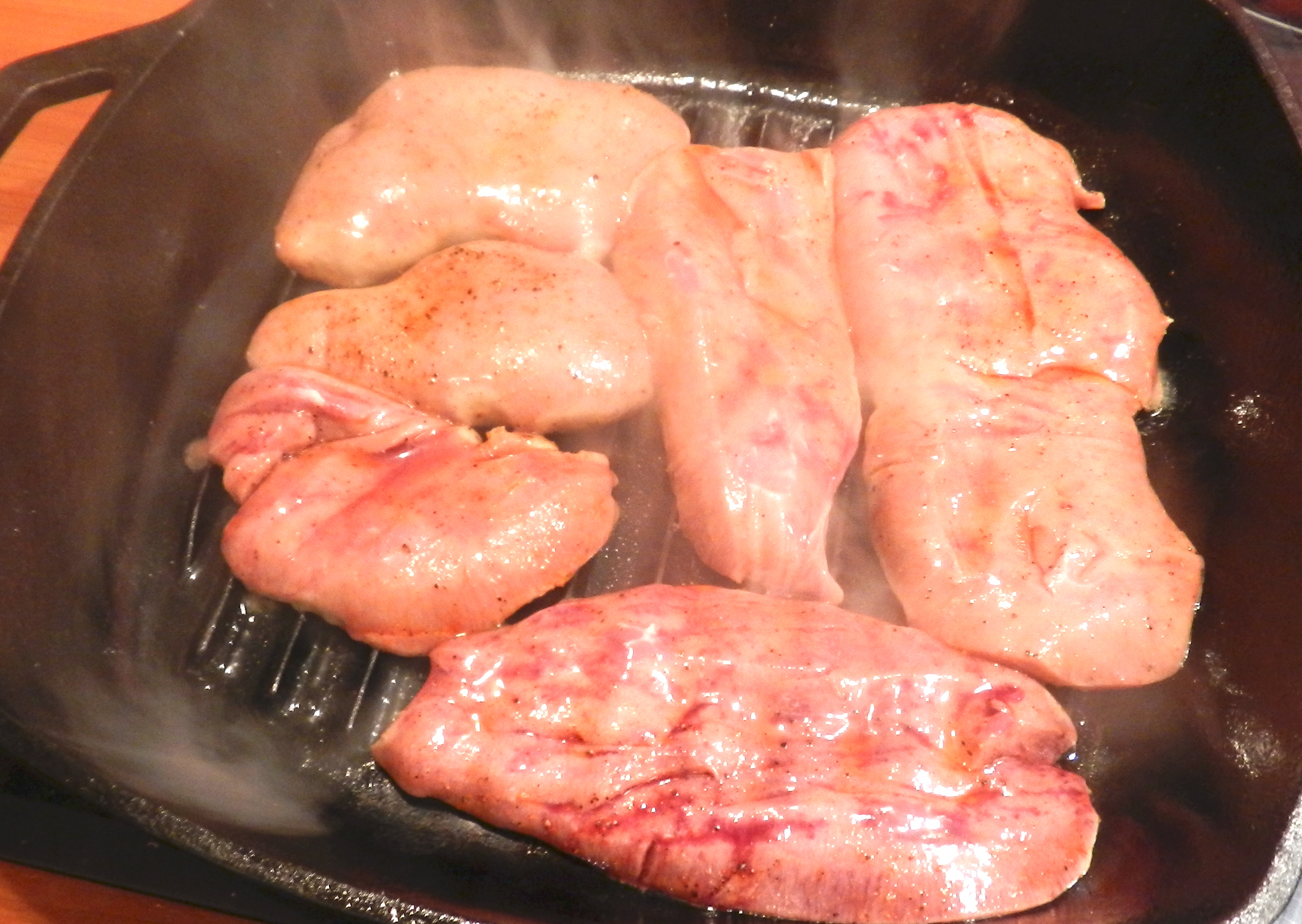
I heated my grill pan, brushed the kidney slices with olive oil, and seasoned them with salt, pepper, and cayenne. When the pan was searingly hot, I added the slices, cooking them quickly. As soon as drops of blood began to appear on the first slice (see photo at right; the piece in the bottom of the picture was the first slice I put in the pan), I turned them with tongs and turned off the heat, allowing them to cook on the second side for just a minute more. The pieces that were pink or even slightly reddish inside were delicately flavored and textured. The thinner pieces, though delicious, were a little tough. Next time, I’ll make sure all the slices are perfectly even — or I’ll cut them into smaller pieces as recommended in the Asian recipes and quickly stir-fry them with those hearty flavors.
 My Iraqi Baker
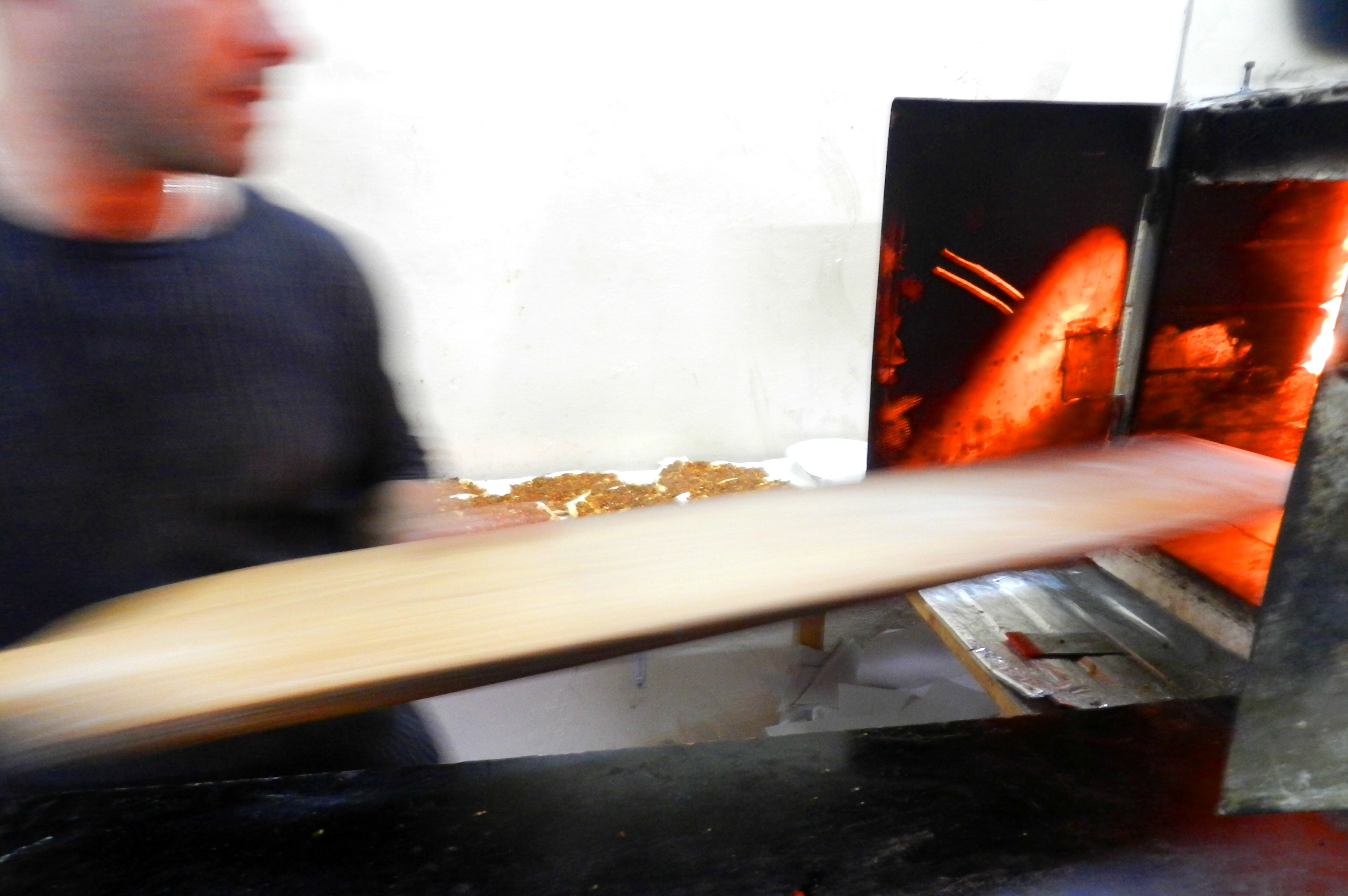
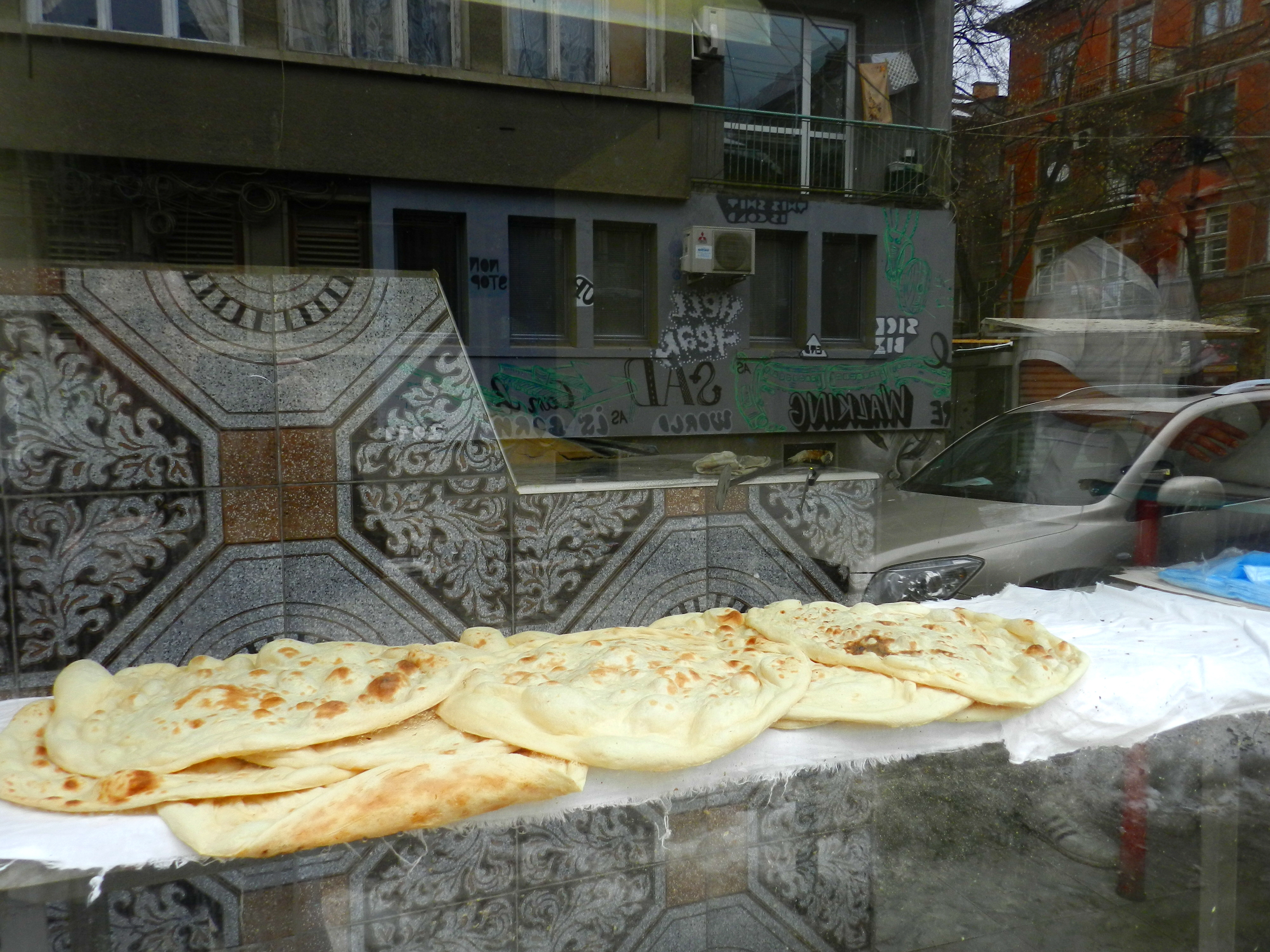
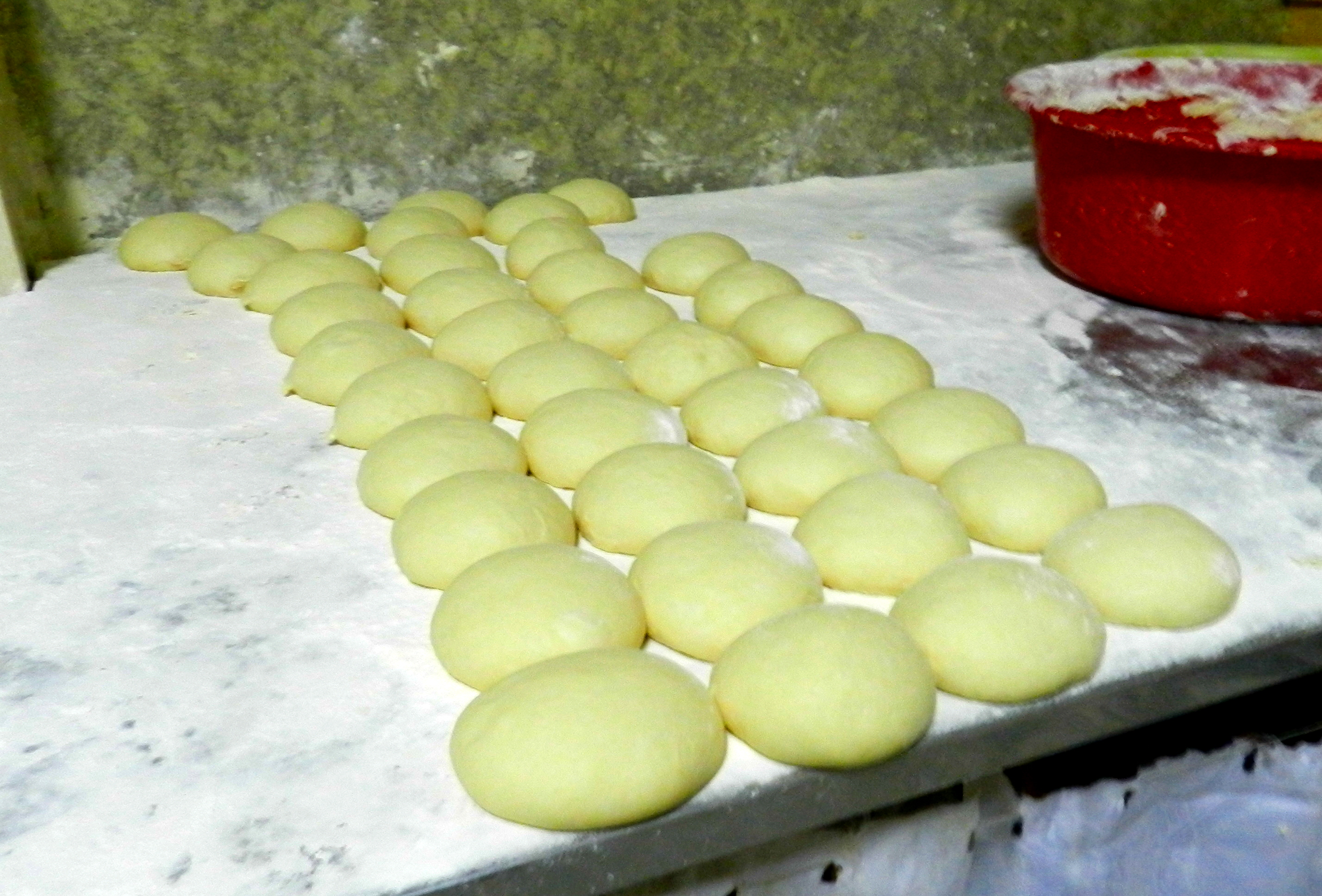
I have posted a video here from my Iraqi baker in Sofia. If you can’t view it, please let me know (it’s on my Facebook page, and if you’re not my friend, just ask). The first time I saw the bakery, which has no sign, I was walking down Tsar Simeon Street, where I had gone looking for a Turkish barber. There are lots of Middle Eastern shops on the street — Iranians and Syrians and Lebanese selling hookahs and tablahs (Arabic drums) and typical foods such as olive oil, chickpeas, sesame seeds, and pitas. This was about this same time last year and I had recently been to Istanbul where I had had the best haircut (and shave) of my life. Before I found a barber, I saw these flatbreads at eye level in a shop. The tiles encase two tandoor ovens built at a slant — easier to access the breads inside, I think, rather than having to bend over the extremely hot fire. There was a line, so I went on to get my hair cut a couple of doors away. While I was waiting, someone delivered some fresh, meat-filled pitas to the barbershop. The barber gave me a piece and it was delicious, but, after my haircut when I returned, the bakery was empty. Later, an American friend who works at the Embassy and lives nearby excitedly told me about the Iraqi bakery in his neighborhood. We went, but there were only plain pitas, and we had just eaten. He told me that when the weather is warm, the queue snakes around the corner. Of course, it only takes a moment for the bread to bake, so when people come to buy, they tell the baker how many pieces they want and the baker pats each dough ball, stretches and swirls it into a large flat circular shape about the size of a large pizza, shapes it on a semi-spherical mold, dusts it lightly with flour, then slaps it against the interior walls of the blazing hot tandoor walls for a minute or two until it it perfectly cooked, removing it from the oven with tongs. The process is shown in the video. If the pita (also known as khubz or laffa) is not perfectly cooked — that is, if it is cracked or has a too-thin area, he tosses it aside, where he eats it himself. 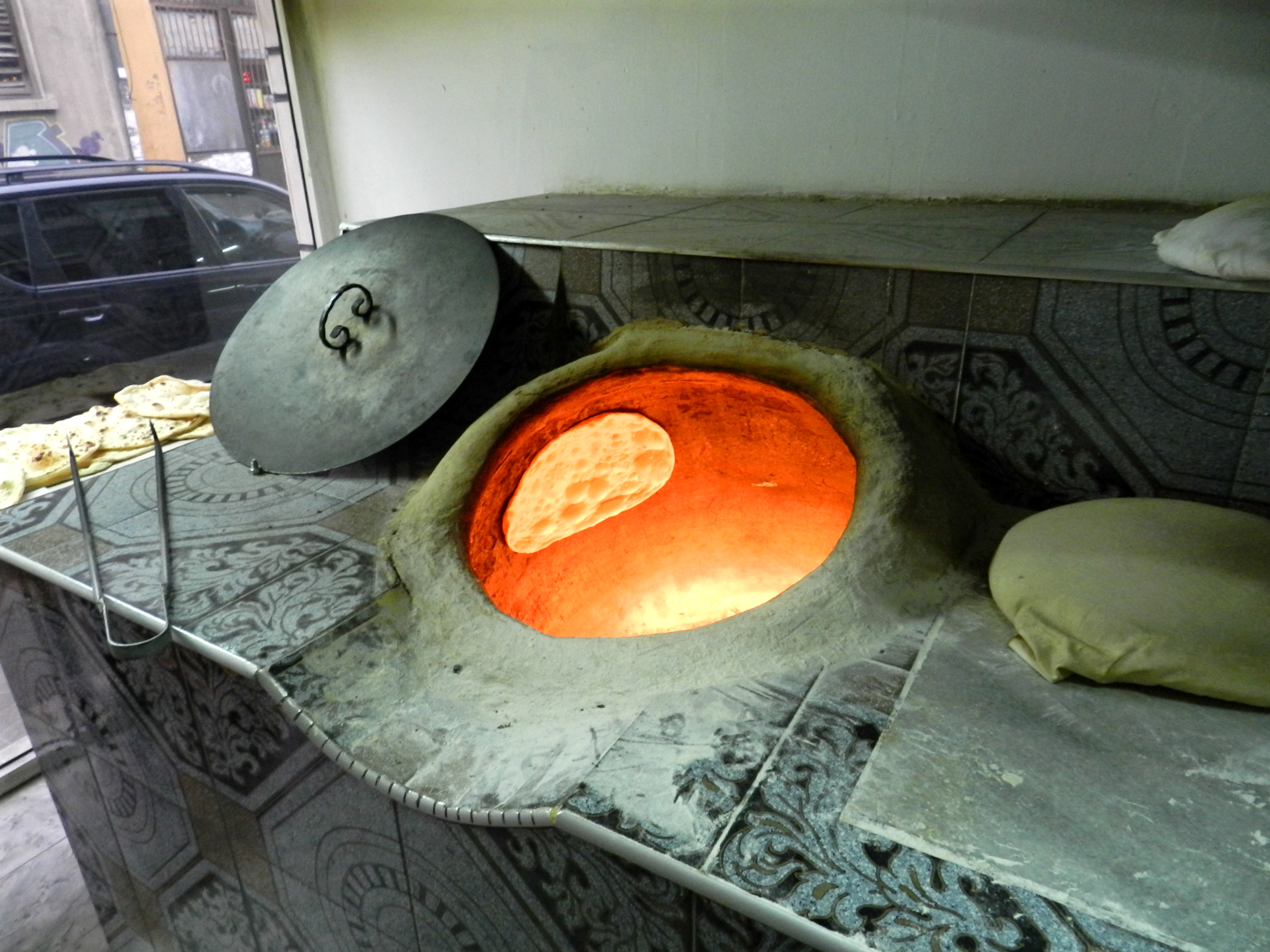
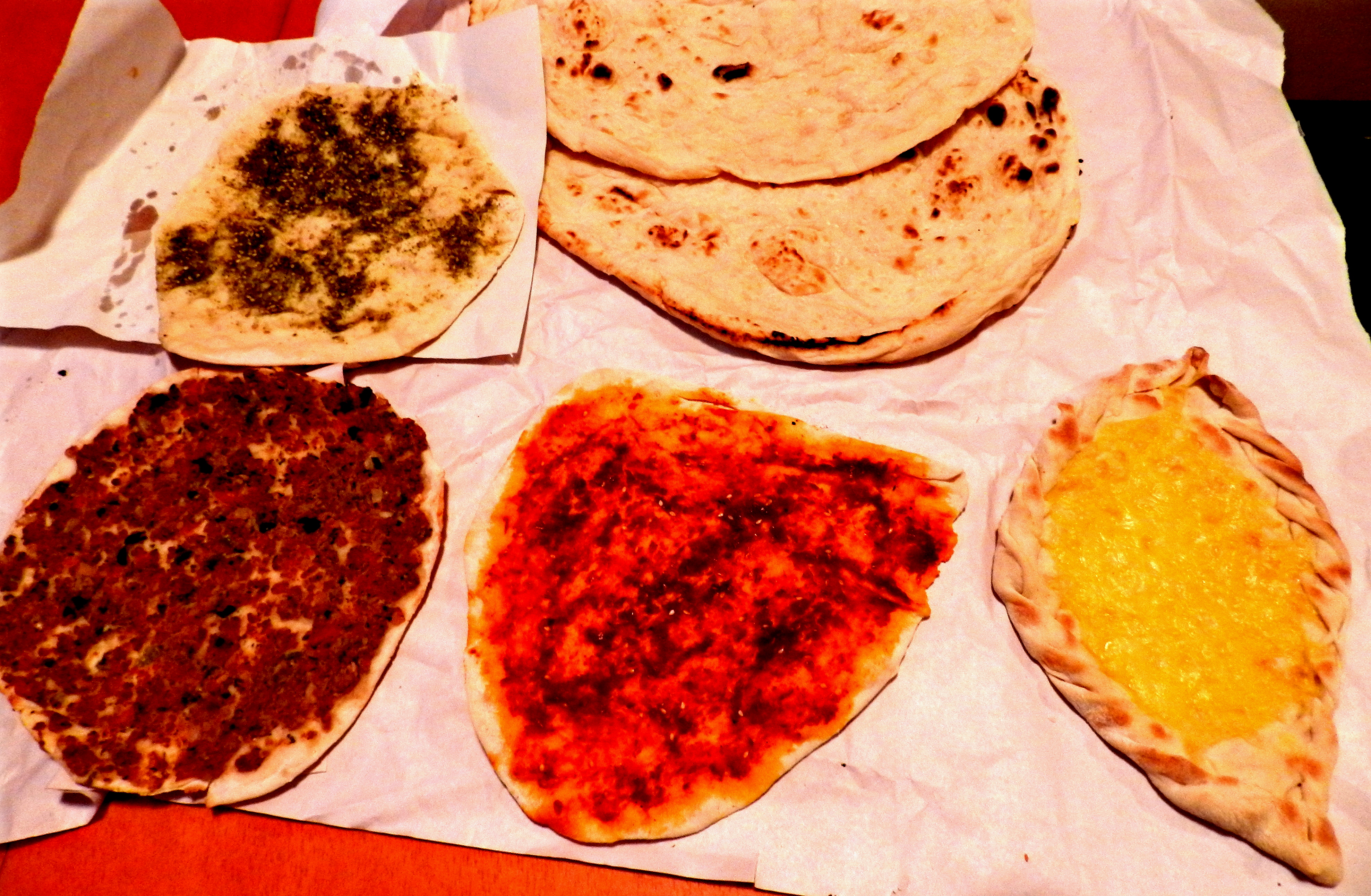
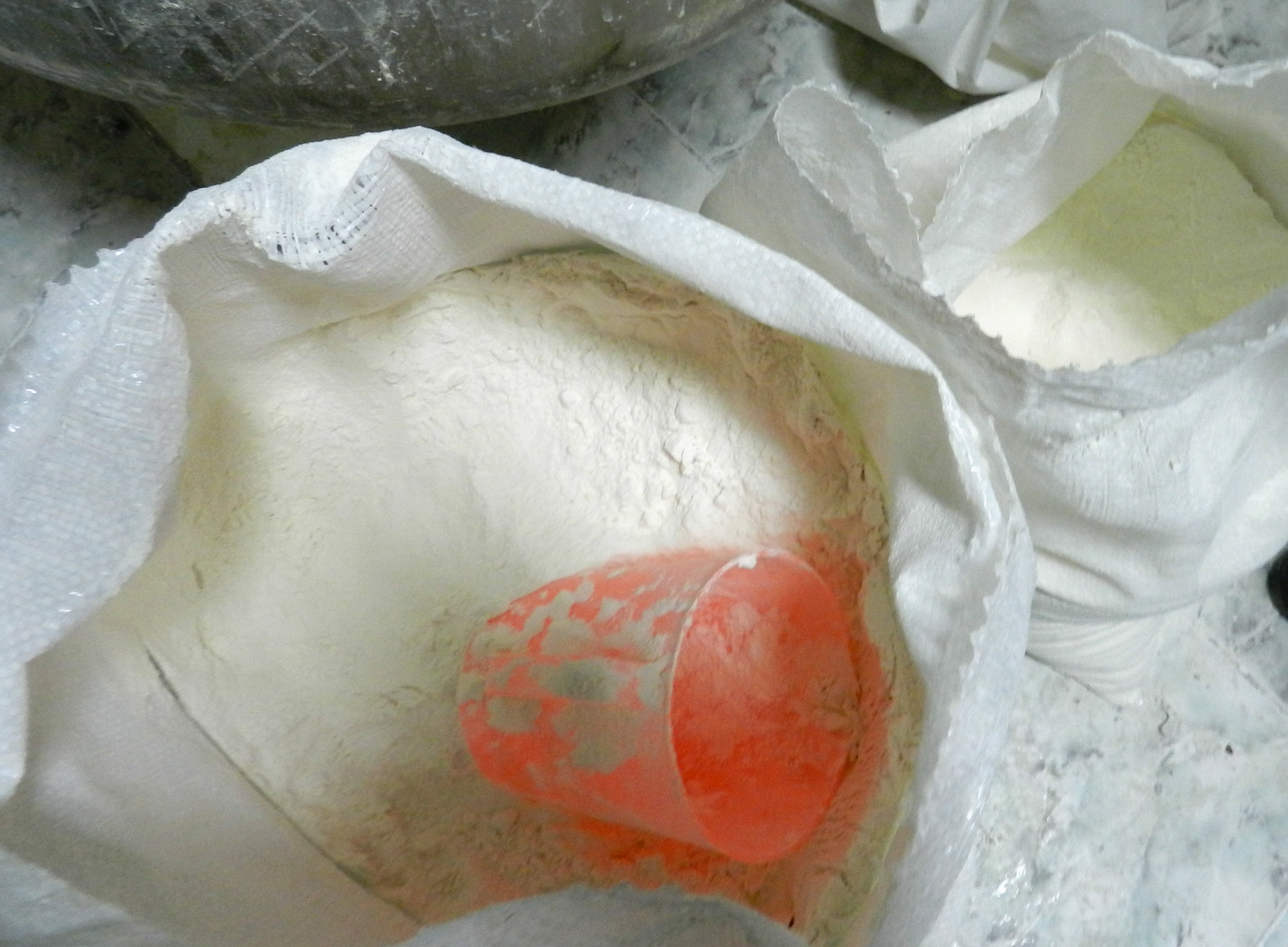
Recently, the makhbaz (bakery) has expanded, taking over the shop next door and adding a larger oven in which they can cook the filled breads and the flatbread doughs which are baked after being topped with various ingredients. Sammouns are the diamond-shaped pillows, often filled with sesame seeds — though there are so many different regional variations and different words for the breads that I hesitate to sound too authoritative here, since I speak no Arabic or other Middle Eastern languages. On my most recent visit, Husam Al-azzawi, the owner was there. He speaks English. I asked him what the name of his establishment is, and he said, simply, it’s the makhbaz. “Why is there no sign,” I wondered aloud. He told me that there was no need for a sign, and, besides, no one would understand it if it were written in Arabic. Anyone walking down the street could see his goods in plain sight, and, besides, we all know that word of mouth travels quickly about good food. On the last day I visited, the sesame sammoun was, as always, the first to disappear. Husam’s bakers use a mix of soft and hard flours and sourdough starter from the previous day’s breads.
Al-azzawi moved to Sofia from Baghdad 8 years ago and immediately opened his tandoor bakery. Though he has always offered filled breads (more difficult to make in the tandoor oven), his new gas-powered oven in the adjoining shop allows him to bake many filled and topped breads at once. I’ve tried them all except the sammoun, which has always been sold out when I arrive. His laham hajim (his words), topped with ground beef, onion, tomatoes, and parsley, is irresistible. When I posted a photo on Facebook, I got responses from culinary experts and former Peace Corps volunteers, calling it by its many various names — lahmacum, lahn bl’ajin, lahmanjoon, taboon— depending on where they have eaten it. It’s street food in Turkey and Armenia, and it’s delicious. Taboon is a variation on tanoor, or tenur, or tandoor — which refers to the oven. In many places, these breads — khubz in Arabic, laffa in Hebrew — may be cooked in the domed clay ovens like Al-azzawi’s or atop a convex pan not unlike an overturned wok (called a tenur or tenure in Kurdistan). Following the words is not unlike doing genealogical research. It’s all related. Would that people of different religious beliefs would sit at table together to enjoy these foods which are common to Hindi, Muslims, and Jews alike. I’ve grown quite fond of the meat-topped breads, but I also liked the classic Iraqi topping, za’atar, green with thyme and sesame seeds. I bring them home to accompany soups and stews or to serve by themselves with a green salad and a bottle of red wine.