

I’m cooking a rabbit tonight. I haven’t been blogging much but I know that I’ve posted lots on my Facebook pages.
Rant: (I hate the way the new blog platform performs and I don’t like the way the blog looks, either. The people I hired to make the transfer didn’t do what they said they were going to, then they were arrogant about their errors and refused to correct them. It became a pissing match with them. I just hope I don’t run into any of them in public! If you’re looking for someone to do some IT work for you in Sofia, Bulgaria, call me first and I’ll tell you whom NOT to use!. At any rate, I apologize for the way many of the pages look. I guess I can straighten out over time, but for now I must get back to sharing my culinary adventures with you – especially before I set out on my book tour in October.)
I went through the last year of my Facebook pages and ran across several photo essays on rabbit cookery. It looks as though I’m fairly regular about cooking them, because I posted on Facebook every three months. I’m including the photos and recipes, such as they are, here. I’ve also already written about cooking rabbit here on the blog several times over the past few years – on November 12, 2007, I gave a recipe for an unctuous, mustardy compote. On February 21, 2008, I cooked a version of Richard Olney’s memorable Lapin à la Toucassaine, stewed with saffron and cucumbers. In September of that year, I cooked rabbit with preserved lemons and olives; the following July, with fennel and lemons. I try not to repeat myself too often in the kitchen.
When I was growing up, most of the rabbits I ate were fairly small ones that my father or I shot. Mama usually fried them unless it was a wintry night, in which case she might make Hasenpfeffer. The following recipe, for two, appeared in my first cookbook, the 20th Anniversary Edition of which is now available. You can buy signed copies from my site (I should have them by September 1) or you can download Kindle or Nook versions from online sellers.
Hasenpfeffer for Two
I grew up in Orangeburg, South Carolina, which is 70 miles inland. Settled in the 1730s by German and Swiss farmers, the town is still largely composed of descendants of those first settles. Lowcountry cookbooks are filled with torten, veal dishes, and other Eastern European favorites such as hasenpfeffer. Most recipes call for soaking the rabbits in mild vinegar solutions — a common practice for game. In this version, however, the rabbit (more than likely a frozen, farm-raised one) is cooked in the tag end of a bottle of red wine — or in a red wine that was maybe just a little off. So the next winter evening that you open a bottle of Côtes-du-Rhônes and it’s not quite what you had in mind, save it for the next night, and make this hasenpfeffer. I do not mean to recommend cooking with inferior wine; indeed, cook only with wine that you would drink. Moreover, if you find, as I have, that each case of wine has a bottle that is not quite as good as the others in the same case, this recipe keeps you from throwing it out.
1/4 pound bacon, finely chopped
a two-pound rabbit, fresh or defrosted frozen, cut into quarters, rinsed, and patted dry
1/4 cup flour
1 teaspoon freshly ground black pepper
1/4 teaspoon salt and a teaspoon of mixed herbs such as herbes de Provence, fines herbes, or
Italian seasoning herbs
1 medium onion, chopped
1 cup chicken, veal, duck, or rabbit stock
1 cup dry red wine, or wine that is slightly vinegared
In a heavy saucepan that has a tight-fitting lid, cook the bacon over moderate heat, uncovered, until it is crisp. Remove the bacon from the pan and set aside to drain.
Mix well together the flour, pepper, and salted herbs. Dust the rabbit pieces in the mixture, shaking off any excess. Brown the rabbit in the bacon fat, cooking the pieces until they are evenly browned. Remove the rabbit and set aside on a plate.
Add the onions and cook over medium low until they are clear, about five minutes. Pour in the wine and the stock, bring to a boil, and scrape up any bits that may have stuck to the bottom of the pan. Add the rabbit and any drippings from where it lay and the drained bacon, and simmer the stew over very low heat, covered, until the rabbit is tender, but not yet falling from the bones. It will take between 1 and 1-1/2 hours.
Serve immediately with traditional German fare such as potatoes and cabbage, or in the Lowcountry manner with a big plate of rice, using the sauce on the rice. Hasenpfeffer means “hare in pepper.” It should be very peppery, so don’t hesitate to add more to taste.
Serves two.
Cooking rabbits in Bulgaria
 Lately I’ve been finding beautiful fresh whole skinned rabbits (gutted, but with the head, the liver, kidneys, and heart intact) from Italy. About a month ago, between visitors (I don’t usually serve rabbits to guests unless they are true gourmands), I prepared a simple French Lapin aux herbes. I did not marinate the rabbit, but covered it with fresh herbs and herb flowers from our terrace and tucked it into the refrigerator overnight. The next day, I cut the rabbit up, sprinkled it with sharena sol (a Bulgarian mix of summer savory and salt) and pepper, then browned the pieces in a mix of butter and oil.
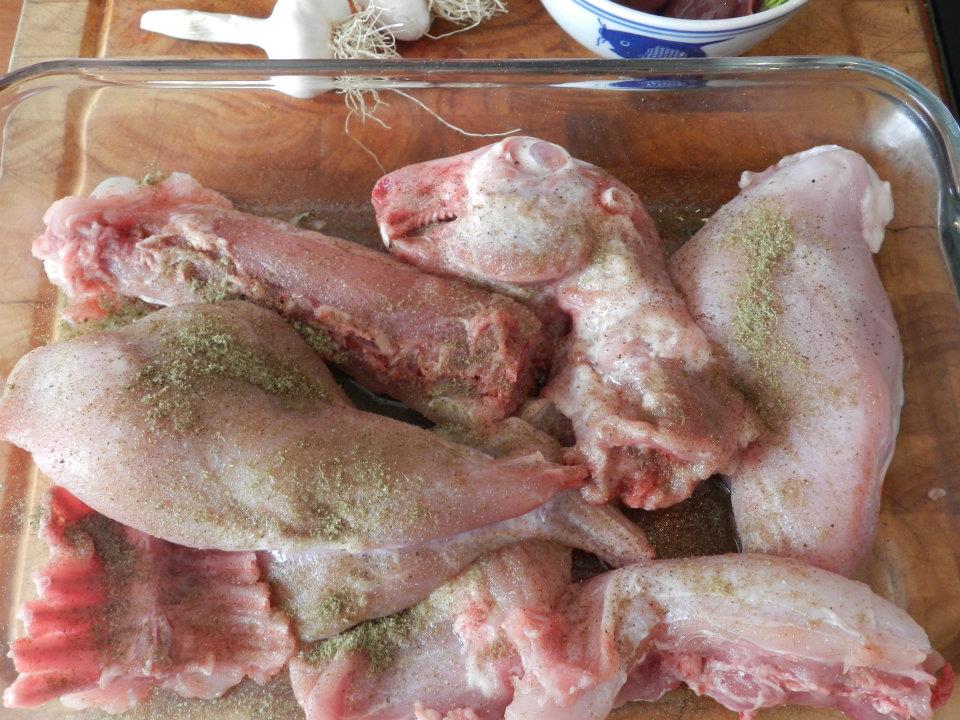
I made a broth with the belly flaps. I deglazed pan with a Bulgarian rosé, added the browned pieces back to the pan with the herbs and two fresh heads of garlic, added broth to barely cover, and simmered it all, covered, for about 45 minutes. I also added the grated zest and juice of a lemon. I removed the remaining broth from the heat and added a bunch of lemon-cured olives to the stock to soften both their flavor and texture.
On a rosemary twi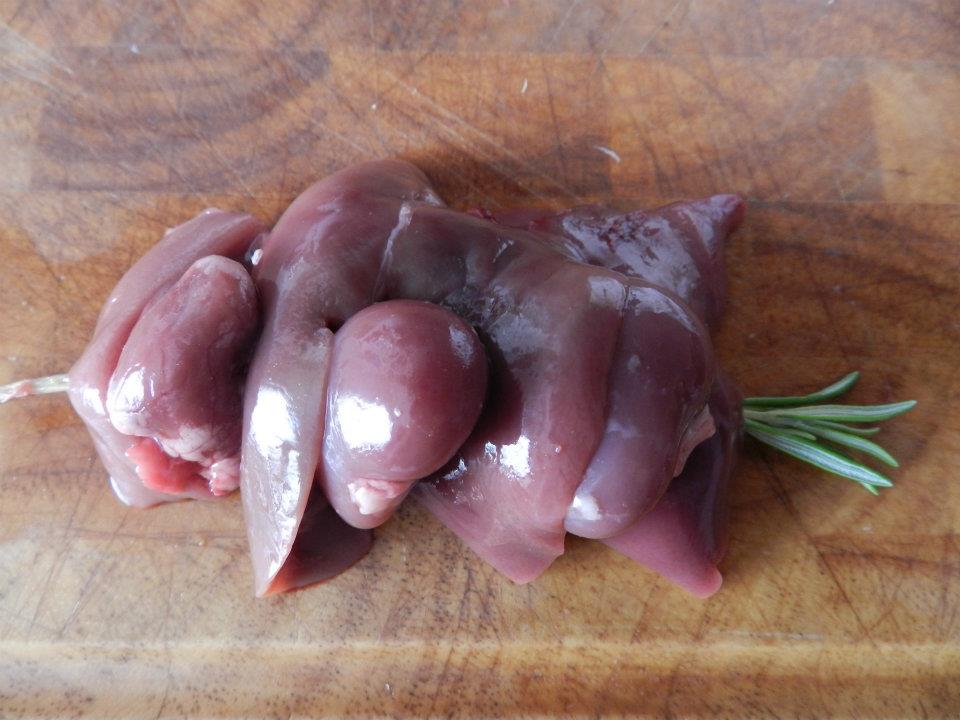 g, I skewered the liver lobes, alternating with the kidneys and heart. I added them to the rabbit stew and let it go another 10 minutes, uncovered, until they were gently poached. I then removed all the meat and offal to a platter and added the olives. Then I added the remaining broth to the pan juices and reduced to a sauce that was almost as thick as I wanted. I strained it well, pushing all the softened garlic through. I stirred the sauce well and strained it once again onto the meat.
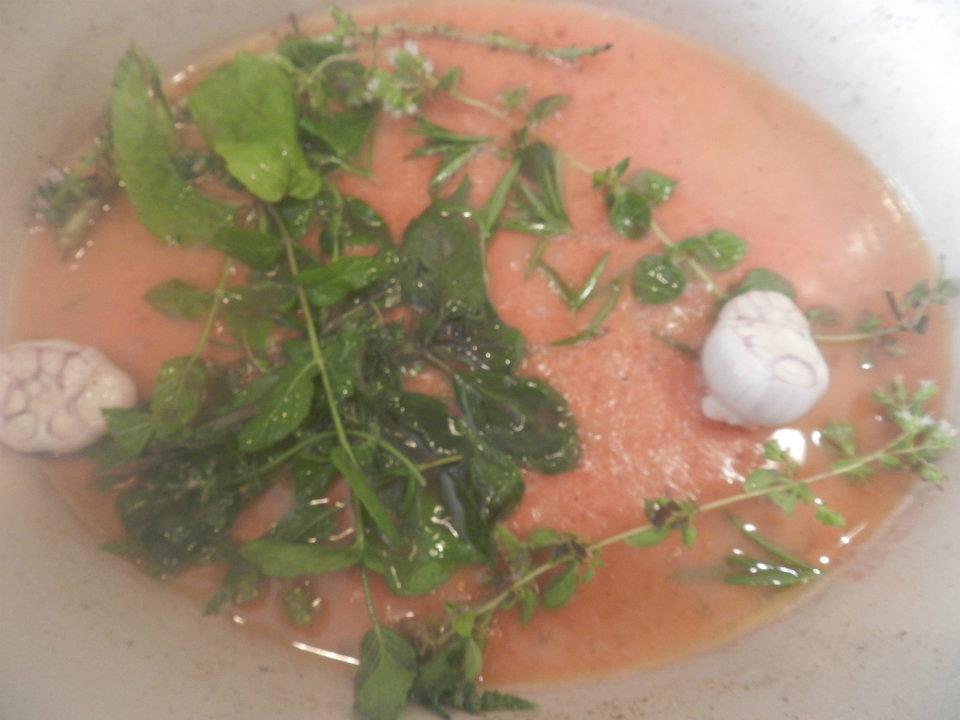
On my Facebook page, I titled the photo essay “Not for Vegetarians.” The head is the best part, though I had to use a cleaver to crack it open to get to the scrumptious brains. I served the dish with red rice. It was a delicious meal that we ate outdoors with our hands. Definitely not for vegetarians!
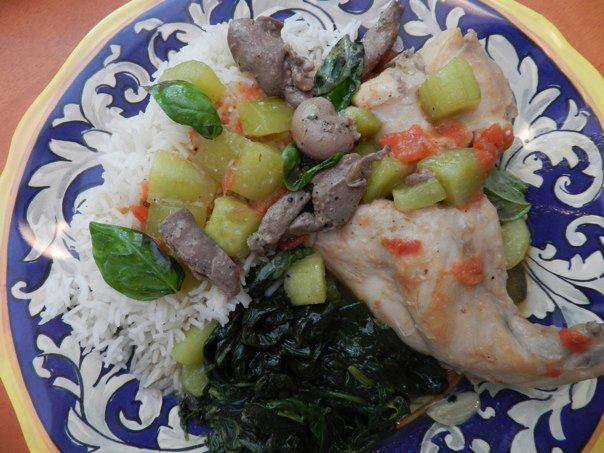
Back in April, I made another version of the Richard Olney recipe. I swear the recipe calls for 20 pots! The rabbit is garnished with slightly cooked cucumbers, tomatoes, basil, and the liver and kidneys of the rabbit. I served it with a pilau cooked in rabbit stock. The greens – impossible to find in Bulgaria — are turnip, mustard, romaine, and arugula seedlings from our balcony.
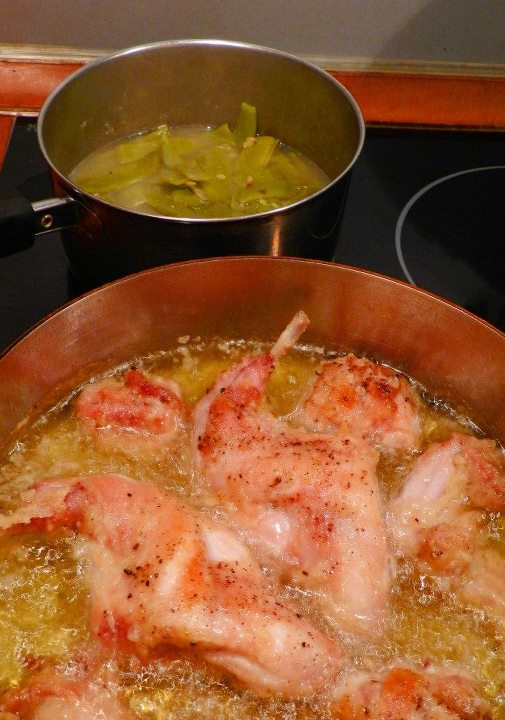
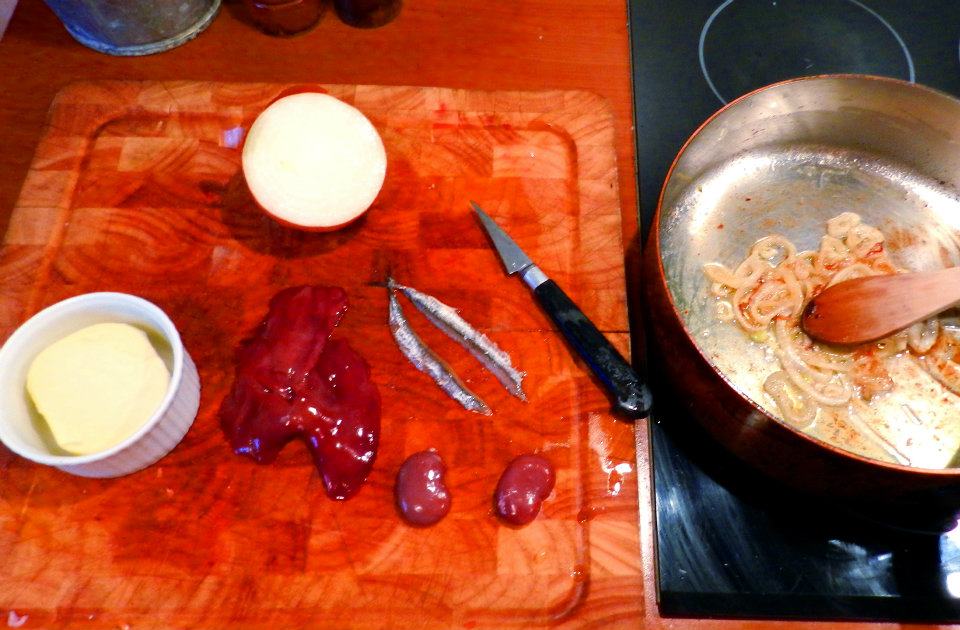
In January, I pan-fried a rabbit, having sectioned it and made a stock with the trimmings while the choice pieces sat in brine. I caramelized onions in butter than added a (rinsed) salted anchovy, melted it, and then added the liver and kidneys. A splash of a white Côtes du Rhône was stirred in to finish the sauce. The offal was served on simple, unsalted whole-grain crackers as an appetizer. I made gravy to go on rice, the way Mama did. Those are pole beans in the rear pot. That’s how I’ll cook the rabbit tonight.

In November, I see that I served rabbit with potatoes cooked in duck fat one day for lunc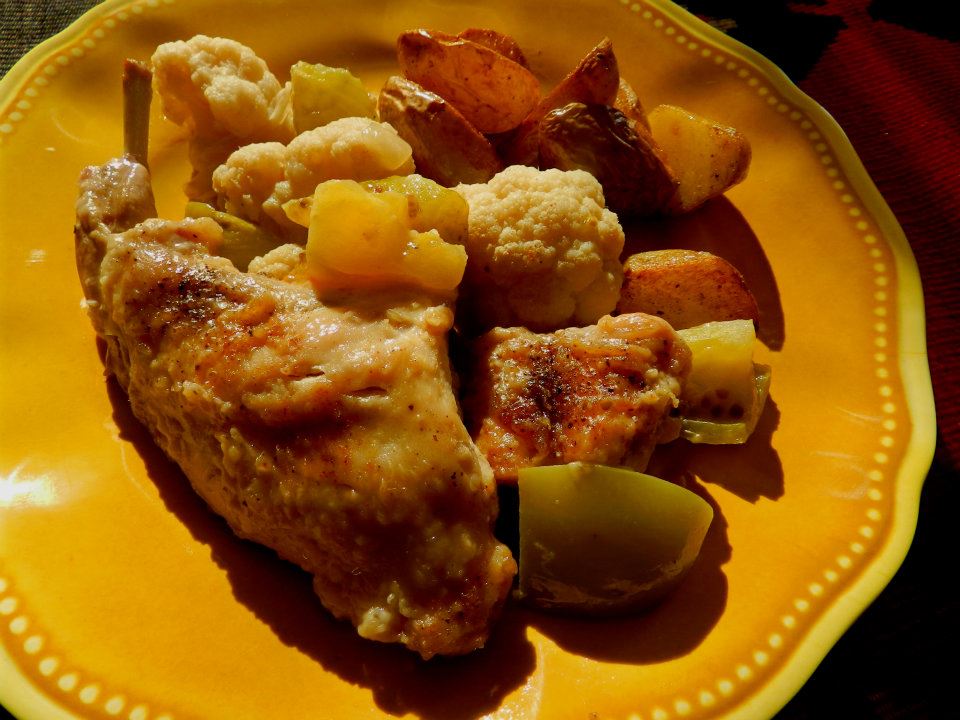 h. I browned the rabbit in olive oil and made a stock with the head, trimmings, and aromatics. After browning, I deglazed the pan with white wine, added onions and green tomatoes, more white wine and rabbit stock, and the browned rabbit pieces. It simmered, covered, for about 45 minutes, then I added cauliflower. Here’s a photo of the finished dish with green tomatoes and cauliflower.
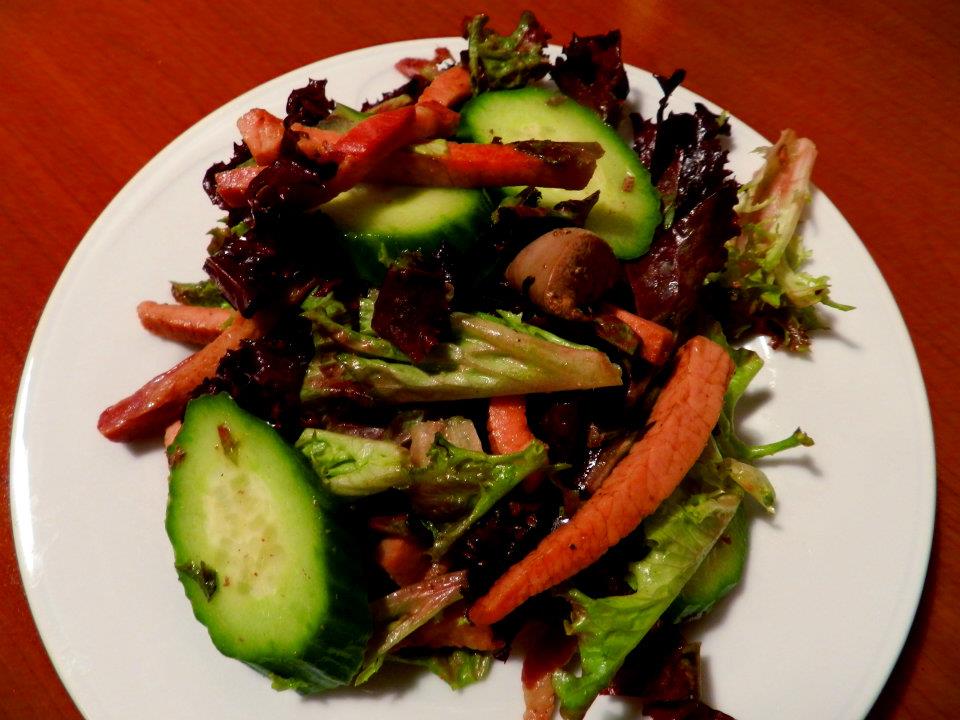
For supper that night, I made an omelet and salad, the salad made with the rabbit liver cooked in duck fat with the last of some Viennese speck a friend had brought me. I added sherry vinegar to the pan to deglaze it and poured the pan juices over greens and cucumbers.
Those are my rabbit tales for now.