
 December 14, 2015 Savannah, Georgia. Sometimes when I look at my blog and see how little activity there is, I am flabbergasted, because I feel as though I have shared nearly every meal. And in fact I have, via Instagram and Facebook. So much of what I cook are tried and true recipes that I have posted before on the blog or they are simply things that I have conjured with what I had at the time. The last time I blogged was October 30, so I thought I would go back to that date on my Instagram and Facebook accounts and pull the photos and see just what I’ve been cooking. With my husband living in Washington and his mom in a nursing home up near the North Carolina border, we are spending an awful lot of time on the road. That coupled with the fact that I spend most of my time alone has curtailed my cooking somewhat, but not much.
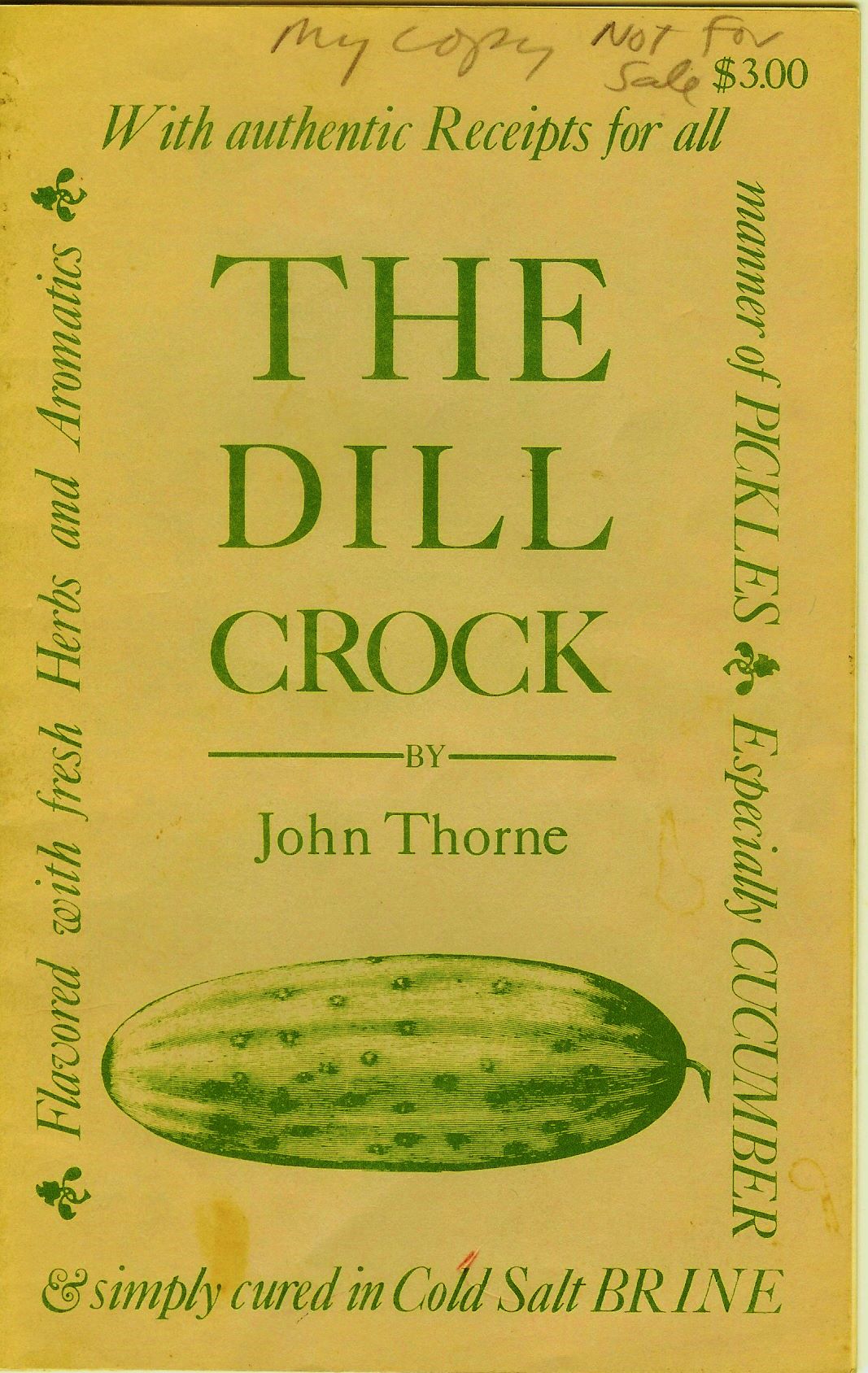
I’ve long been an avid pickler/preserver/canner, and the current fascination with fermentation sent me back to the way I used to make pickles when I was in college — by cold brining them. When I first started writing about food in 1984, I was living a couple of blocks from Nach Waxman’s venerable and estimable Kitchen Arts & Letters, the world’s premier culinary bookstore. He introduced me to the writings of John Thorne, who at the time was publishing his culinary newsletter, Simple Cooking, full of fascinating history, culture, and recipes. His little single-subject chapbooks that had preceded the newsletter were, and are, widely coveted, none more so than 1984’s “THE DILL CROCK: With authentic Receipts for all manner of PICKLES, Especially CUCUMBER Flavored with fresh Herbs and Aromatics & simply cured in Cold Salt Brine.”
 I was thrilled to see my old friends from Joseph Fields Farms with pickling cucumbers (about 5″ long and 2″ diameter) at the Forsyth Farmers Market a few weeks ago. The Fields family joined the Charleston Farmers Market, of which I was a founder, our second season, after the devastating Hurricane Hugo. As a relative newcomer in Savannah, I don’t know many folks here, so any time I see an old face, it’s comforting. I hadn’t seen them since I closed my shop in Charleston in 1999 and moved from downtown. I bought the last of what they had and immediately came home and pulled my old copy of Thorne’s pamphlet from the shelf. Disheartened to see that my old 3-gallon pickling crock had cracked in one of my many moves (to DC, Bulgaria, China, and Savannah!), I figured that one of my big enameled LeCreuset pots would work just fine. I chose one of the simplest recipes, but first sat down to Thorne’s wonderful writing. He begins: “The essential stuff is spread out on the kitchen table: a bowl of pure salt, a jug of spring water, the vinegar cruet, a bunch of dill, a head of garlic.” To those of you who have long enjoyed (or used to enjoy, when you could find them), old “Kosher” deli-style pickles — both half- and full-sours — you should make some yourself. Nothing could be easier and the results are stunning. Thorne continues, “I have no quarrel at all with those who ‘put up.’ But that sort of preserving just doesn’t connect with my life, the way I cook and eat. … As for pickles — your best piccilli (sic) or sweet icicles — the jar molders in the back of the fridge until the label runs and I can’t tell the year I got it or the name of the donor. Too sweet, too sour, too much like candy — the popular taste in pickles just isn’t mine.” I couldn’t have said it better. I have never understood those sugary bread and butter pickles.
Of course, I am a preserver — I’ve published dozens of recipes, including pickled shrimp, pear chutney, chow chow, piccalilli, figs, scuppernong preserves, Ats Jaar pickles, and Cherry Bounce among them. Living in the subtropics demands more processing of foods than does the New England climate where Thorne lives. The reason I chose one of the simplest recipes is because it is also one of the quickest — and with temperatures staying in the 70s for the past two months, I knew I faced possible spoilage. Here’s what I did, paraphrased from The Dill Crock:
Aunt Ada’s Kosher Dills © John Thorne
“There is nothing especially ‘kosher’ about kosher dill pickles,” Thorne tells us. “Some food writers say the word signals the presence of garlic — which is the same as saying nothing at all…. Perhaps ‘kosher’ and ‘dill pickle’ are linked in our minds by the fact that the dill pickle is pre-eminently a delicatessen pickle, and, for many Americans, ‘delicatessen’ is synonymous with ‘Jewish.” He advises us that salt-brined or vinegar-pickled foods such as these can be processed to give them additional shelf life.” Any decent preserving guide can you give you directions. The Ball Blue Book is a classic. My 1988 copy is the 31st edition, then “a reliable guide for 75 years.” Copies are easy to find online. The latest, 37th edition, sells for $11.95. Working with only 2 dozen cucumbers, I simply placed the finished pickles in jars and yogurt containers in the refrigerator. I’ve already eaten half of them. The stronger the brine, the longer the pickle will last (and the stronger it will taste). The weaker the brine, the fresher it will taste. Thorne gives brines varying from 2 to 10 percent measures of salt to water. Ada’s is a 3% mild brine. The pickles are cured in a week. The bit of vinegar rushes the curing along and prevents mold.
24 medium pickling cucumbers
6 or 7 sprigs of fresh dill
6 or 7 whole garlic cloves, peeled and sliced
1 teaspoon pickling spice or your own combination of spices such as mustard seeds, crushed bay leaves, coriander seeds, allspice, black pepper, red pepper, cinnamon, etc.
3% brine solution to cover (1/2 cup fine pure salt to 2 quarts water) + 2 tablespoons vinegar
Gently rinse the cucumbers and dill and shake dry. Set the cucumbers in a crock or a glass or enamel container, evenly distributing the herbs and seasonings. Pour in the brine and cover the cucumbers with something such as a weighted plate to make sure that they are completely submerged. Place the crock in cool room temperature — 68ºF — for a week, then store in the refrigerator.
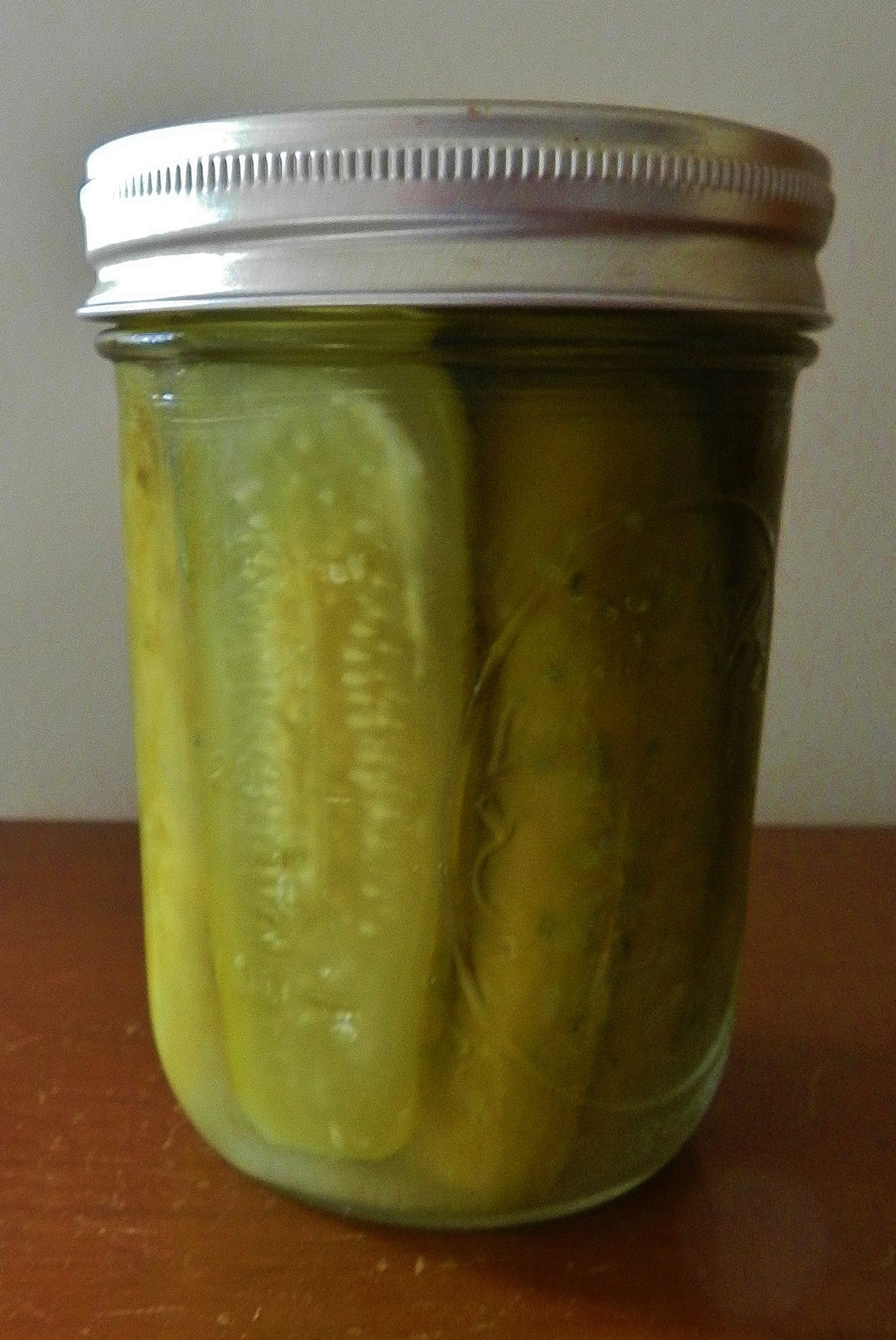
It’s a good idea to check the pickle solution daily to be sure the cucumbers are submerged and to lift off any scum. After you’ve made your first batch, you can vary the seasonings and curing times to suit your own palate. I sliced some of the cucumbers after they were cured so that they would fit in pint jars (see photo, above).
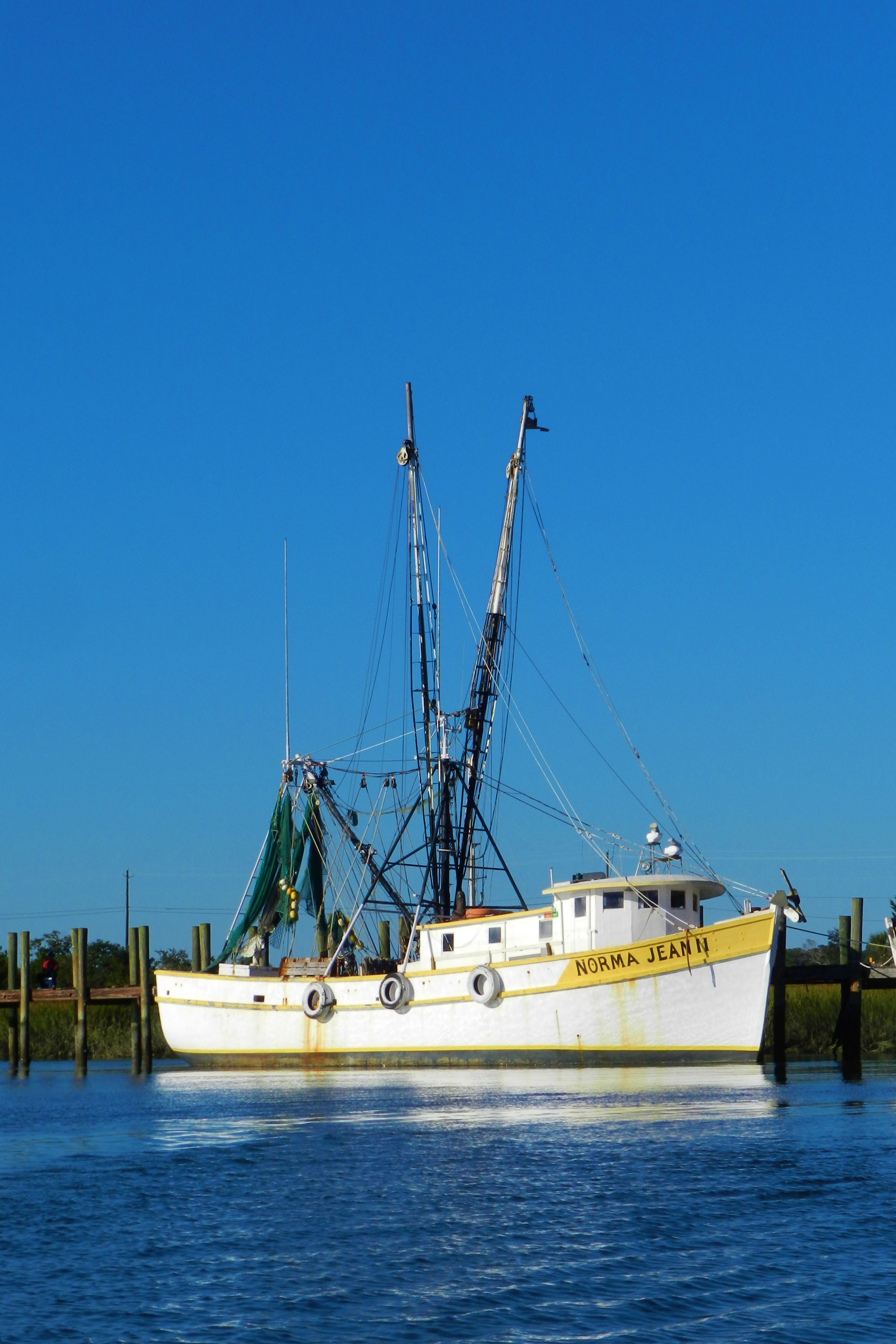 Autumn has been so mild, I’ve spent a lot of time on the water. I frequently go for walks on the beach or to wildlife sanctuaries, and I’m occasionally asked to go boating. Last time, I took fried chicken, old-style, in an aluminum foil lined shoebox, the way we all used to do on trains in the 50s. Many of the foods that I have been making I’ve already blogged about, in which case the highlighted words link to the page on the blog or to other publications of mine.
Shrimp are still running locally, so I have featured them often at my table, including this salad in which I 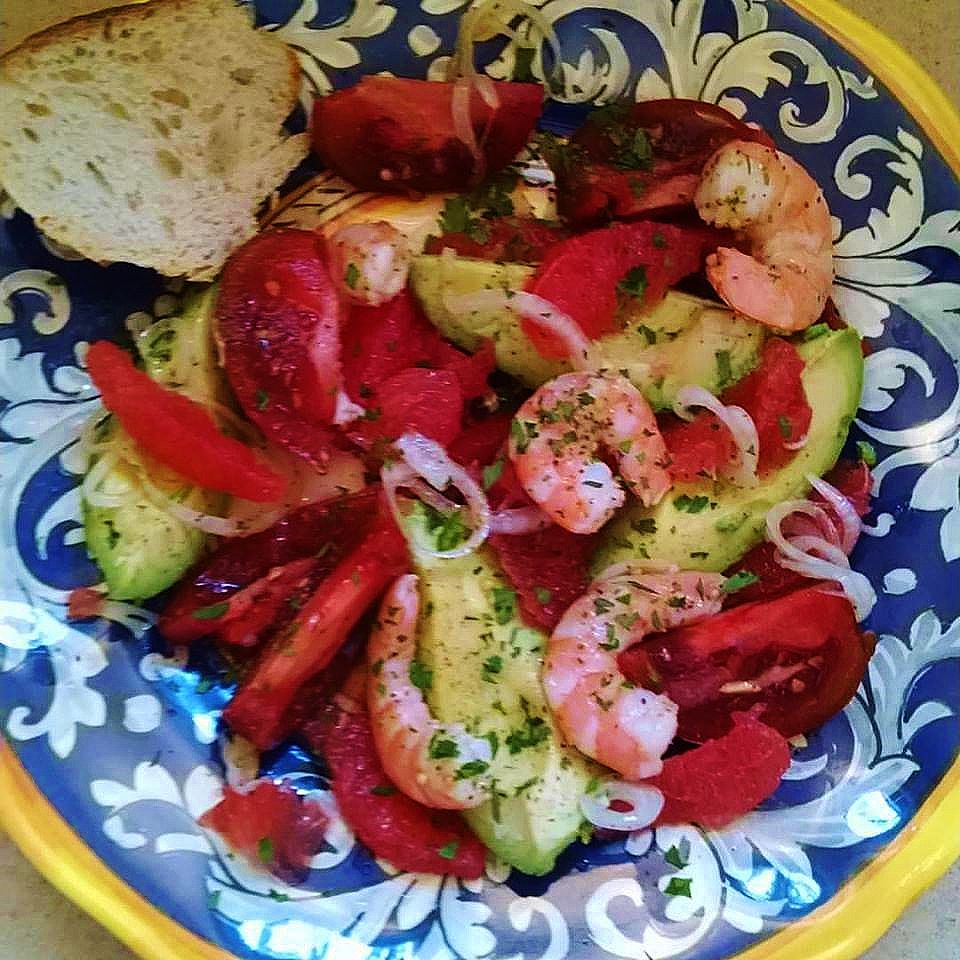 added pickled shrimp(easily one of my most popular recipes) to sliced avocados, red grapefruit, Tasti-Lee© tomatoes (bred for taste and grown outdoors in Florida, they are superb year-round) and jalapeños. Several folks asked me for the recipe, but there is none. I simply tossed the ingredients together. With the juice from the grapefruit and the oil from the pickled shrimp, it needed nothing else but a bit of salt.
Similarly, the pinkeye purple hull cowpeas I bought at the farmers market a couple of weeks ago were all but flavorless, 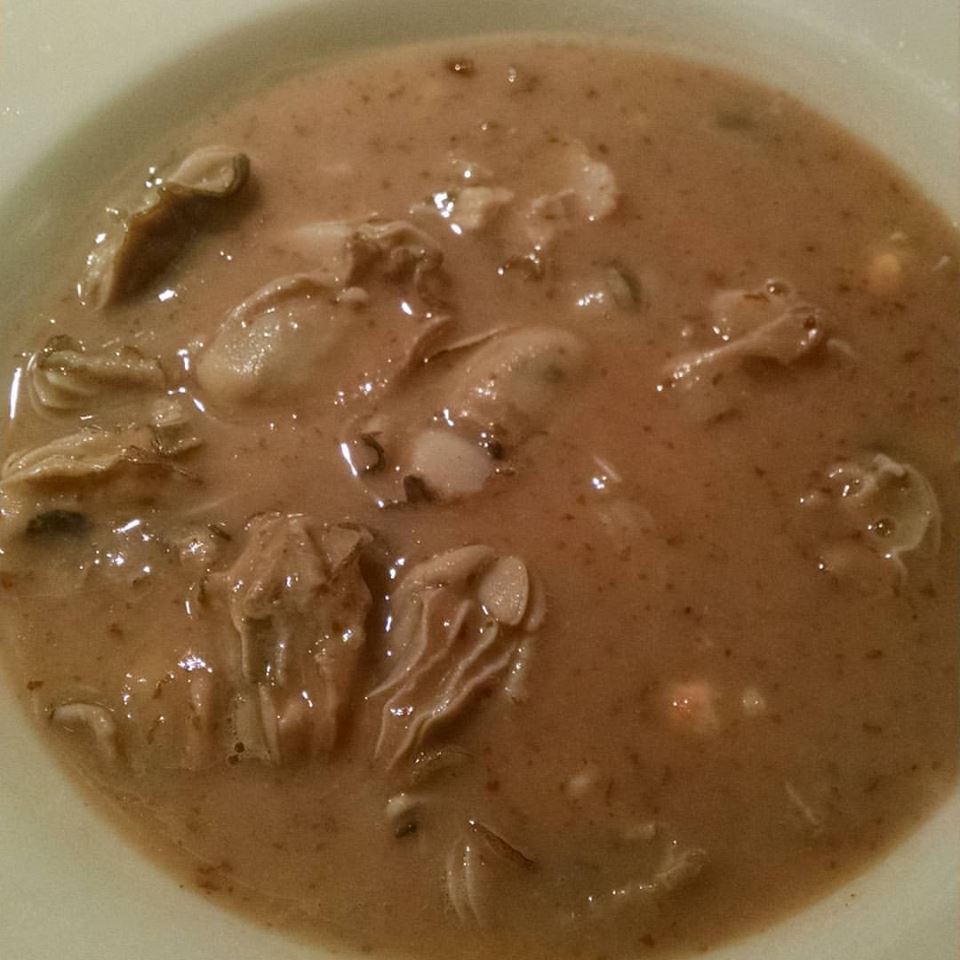 even though I had cooked them with a smoked neck bone and onion, so I added a rich duck stock and pureed them. Even so, the soup was bland, so as I was reheating the soup, I tossed in a few fresh oysters at the last minute, allowing the edges to just barely curl. (See photo, left.) It was exactly what the soup needed!
Though I have spent the better part of my career advocating for fresh and local foods, several times lately I’ve found myself buying asparagus from points south, unable to resist it. I’ve anointed it with olive oil and grilled it, then grated fresh Parmigiana-Reggiano over it, but I have also used my mother’s recipe from her 1940s handwritten collection:

Thanksgiving we celebrated with both my family and Mikel’s, with turkey and cornbread dressing and giblet gravy and greens and Jane Lear’s scalloped potatoes and fruitcake and lots of Champagne. On Black Friday, both the Washington Post and the LA Times listed my oyster knife among their top gifts of the holiday season, so I’ve been really busy packing and shipping them. (And, yes, if you order by noon EST on Monday December 21, you should receive it in time.) I’ve cooked lots of root vegetables other than potatoes: sweet potatoes, parsnips, turnips, and beets. I used Elizabeth Schneider’s tried-and-true baked beets with star anise recipe, but I tossed the cooked beets with walnut oil and a dash of sherry vinegar this last time. 
It’s been mild in Washington as well. Our pied-à-terre there is near the Waterfront Wharf, one of the country’s great seafood markets. I bought flounders and shrimp right off the North Carolina boats, and fresh sardines (Atlantic herring) from points north. I made boquerones (left) with the sardines — a type of Iberian ceviche I explained in detail in April 2009 — and made a very Italian-style shrimp and grits (right), which I wrote about in July 2008.
I’ve boiled peanuts, made my Rockefeller turnovers, prepared croquettes with leftover turkey, cooked frittatas, and preserved lemons, all of which I’ve blogged about before and posted on Facebook and Instagram. (If you use the Google search engine on these pages, it’s much better than the internal one.)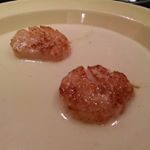
So it’s not as though I haven’t been cooking — or sharing. But I’ve written about so much of it before. At left is another dish I made with big, fresh, sticky sea scallops seared and served with a celeriac puree. Again, no recipe. When I posted the image on Instagram, one of my followers said that he always has a hard time searing scallops. My advice? Make sure you have very fresh deep sea scallops with no water added. They will be sticky. I use a very well-seasoned cast iron skillet but I still paint a film of oil on the surface and get it blazing hot. I add the scallops, count one minute, shake the pan (they should shake loose), turn them with tongs, turn down a heat a bit and let them go another 30 seconds or so. The puree was mostly celeriac, with a little bit of potato and a light vegetable stock. As always when dealing with vegetables, I refer to my dear friend Elizabeth Schneider‘s works for guidance. I had the distinct privilege of dining alone with her at her home in New York recently. I also had Sunday brunch at Maialino, where I highly recommend the soft-scrambled eggs and the pistachio croissant. To top things off, we met my former editor Roy Finamore at our mutual friend Sara Jenkins’s wonderful Italian eatery in the East Village, Porsena. It may well have the best pasta in town and the food is so simply prepared and straightforward you might think you were actually in Italy.
I hope you all have a safe and happy holiday season!