September 12, 2013 Though I haven’t been cooking much, I think today I’ll harvest what’s left of the tomatoes and make a nice tomato sauce to have on hand and some picalilli — a relish made with green tomatoes. I’ve been scrolling through my photos on Facebook and see that I was keeping myself fairly busy right up until my surgery. This silly photo of a “Strata” I made one day caught my eye.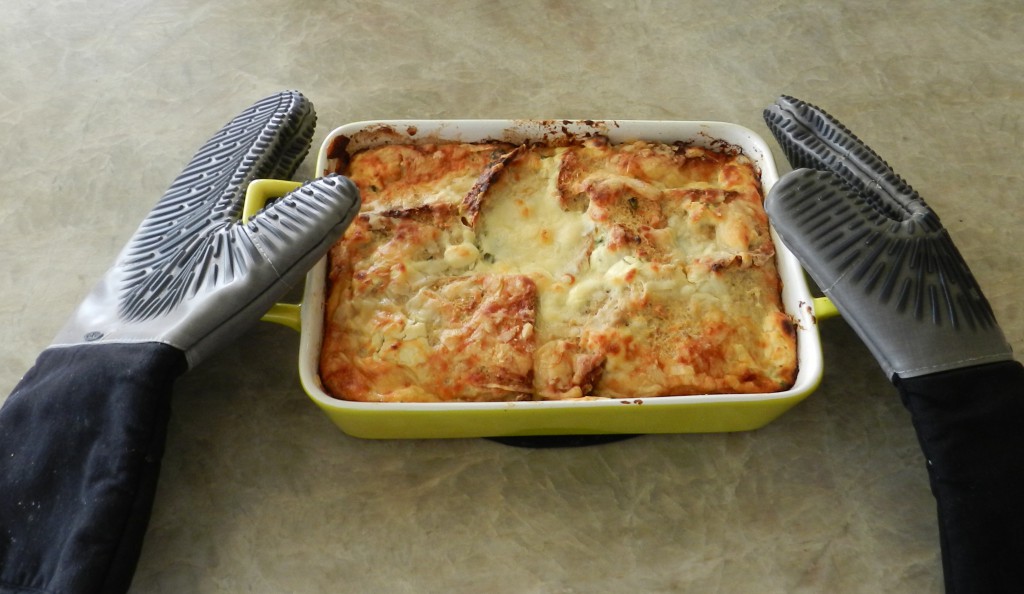 I am pretty sure that the first time I had strata was at the home of Mary Ashley and Charles Williams. They lived in a big old plantation house out in the country where I would occasionally spend the night. All four of the kids (Charles and Mary Ashley had an older brother and sister) would often have spend-the-night guests, and on Saturday mornings we could come down to the big kitchen table where bowls of steaming hot grits would be at each place setting — if strata was not on the menu. We would seat ourselves and begin digging into the mounds of sausage, bacon, and liver pudding (just like scrapple, bound with rice instead of cornmeal) as Clara, their cook, stepped outside to gather fresh eggs from the hens. She would walk around the table, asking us how many eggs we’d like, then crack the eggs, dropping the fresh yolks into the grits. The egg whites she would then beat with sugar to make a glaze for the fresh doughnuts she would have just fried. It was magical. But I also remember her strata — sort of a savory bread pudding that is made with layers of bread, cheese, and an eggy custard. Sausage or peppers or mushrooms find their way into strata in some homes, but, in spite of its name, I never saw one in Italy.
The following recipe is from my second book, The New Southern Cook:
Goat Cheese Strata
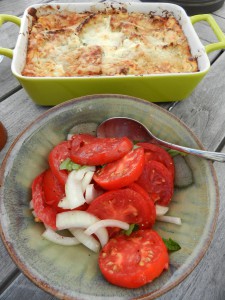
Strata is the name of a baked cheese dish — like macaroni and cheese with bread instead of pasta — that is often served as part of a large country breakfast in the South. In this version, I’ve used chèvre instead of the usual cheddar, and added some garlic and fresh herbs for an intriguing flavor. It’s still a wonderful breakfast item, but works as well as a side dish. Place big squares of it on a pool of a stovetop tomato sauce (recipe follows) and you’ve got a great lunch item. Or simply serve it as we did recently, with fresh tomatoes, sweet onions, and basil from the garden.
butter
8 slices homestyle white bread, crusts removed
3 eggs
1/4 teaspoon salt
2 cups milk
1/2 pound crumbled goat cheese
1 clove garlic, minced
2 tablespoons chopped fresh herbs of your choice
The night (or at least 8 hours) before you plan to serve the dish, butter an 8-inch square baking dish and line the bottom with four slices of bread. Beat the eggs until light, then mix well with the remaining ingredients. Pour some of the mixture over the bread slices in the pan, then alternate with the bread slices and the cheese mixture. Refrigerate the strata overnight.
The next morning (or 1/2 hour before serving), preheat the oven to 450°F. Bake the strata for about 25 minutes and serve piping hot.
Serves 4 to 6.
Debbie Recommends: Sangiovese or a Fumé Blanc.
Easy Tomato Sauce
This quick sauce of fresh tomatoes and sweet onions is a perfect foil for many summer dishes such as fried fish. Nothing could be easier. You may add fresh or dried herbs to taste if desired.
2-3 tablespoons olive oil
1 medium sweet onion, chopped (about 3/4 cup)
2 cloves garlic, green shoots removed and finely minced
1 tablespoon fresh or 1 teaspoon dried herbs to taste (optional)
6 vine-ripened tomatoes (about 2 pounds), peeled, seeded, and chopped, or a 28-ounce can plus one 16-ounce can peeled
tomatoes, seeded and chopped
1 teaspoon salt
freshly ground black pepper
freshly squeezed lemon juice
Heat the olive oil over medium heat in a nonreactive saucepan. Add the onion and cook until it begins to become transparent, about 5 minutes. Add the garlic, tomatoes, salt, pepper and herbs (if using) to taste. Cook for another 15 minutes or until the sauce has begun to thicken. Season to taste with lemon juice, then transfer to a blender or processor and puree. Return to the pan off the heat, straining if necessary or desired.

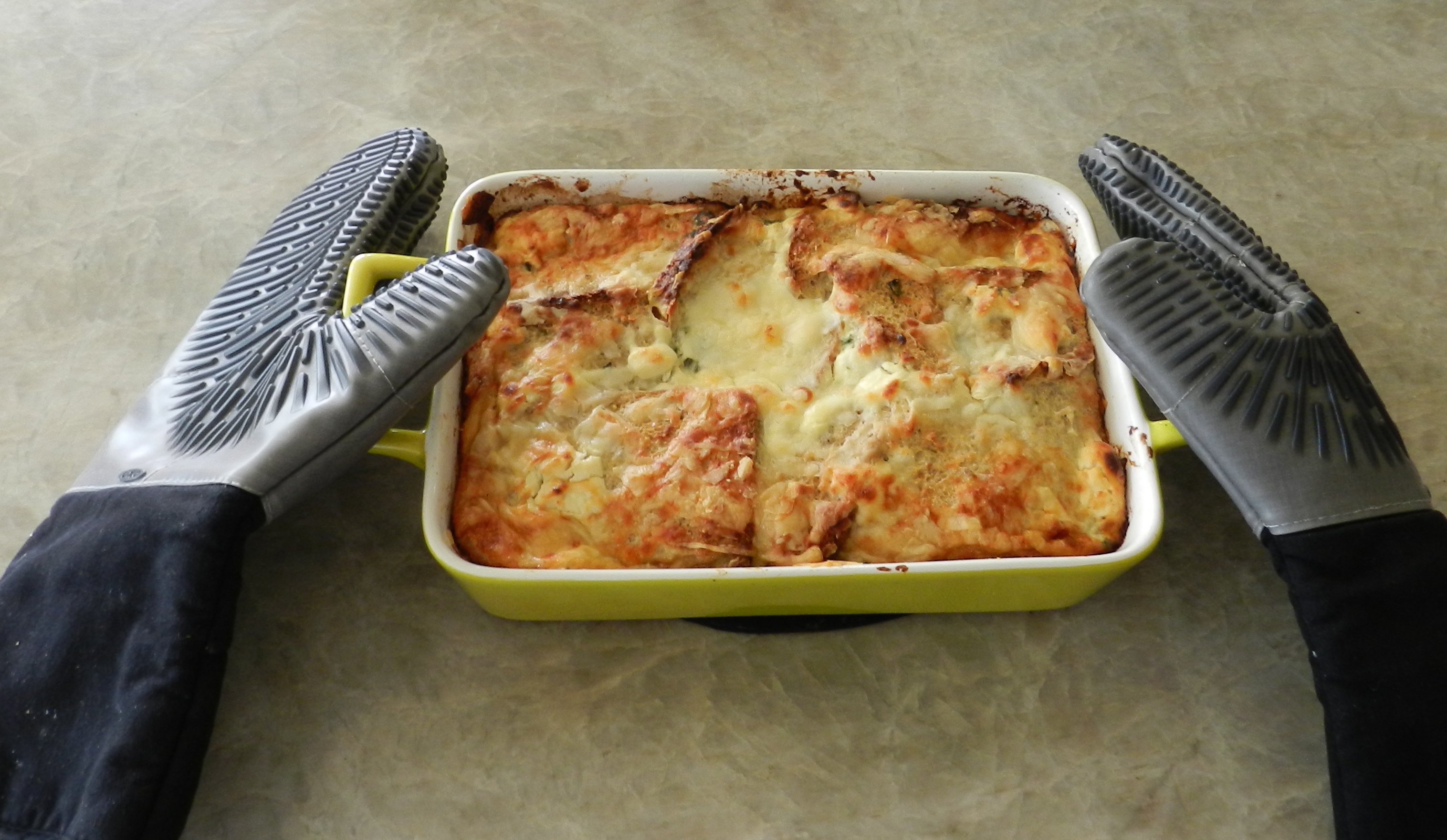 I am pretty sure that the first time I had strata was at the home of Mary Ashley and Charles Williams. They lived in a big old plantation house out in the country where I would occasionally spend the night. All four of the kids (Charles and Mary Ashley had an older brother and sister) would often have spend-the-night guests, and on Saturday mornings we could come down to the big kitchen table where bowls of steaming hot grits would be at each place setting — if strata was not on the menu. We would seat ourselves and begin digging into the mounds of sausage, bacon, and liver pudding (just like scrapple, bound with rice instead of cornmeal) as Clara, their cook, stepped outside to gather fresh eggs from the hens. She would walk around the table, asking us how many eggs we’d like, then crack the eggs, dropping the fresh yolks into the grits. The egg whites she would then beat with sugar to make a glaze for the fresh doughnuts she would have just fried. It was magical. But I also remember her strata — sort of a savory bread pudding that is made with layers of bread, cheese, and an eggy custard. Sausage or peppers or mushrooms find their way into strata in some homes, but, in spite of its name, I never saw one in Italy.